1. Headline & intro
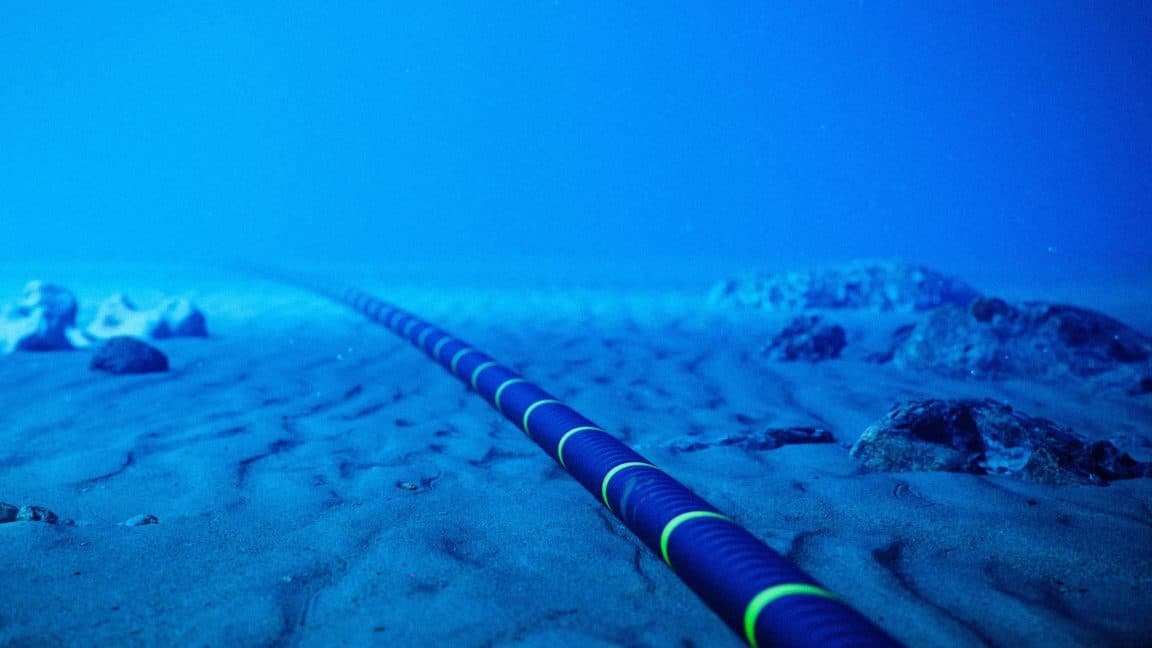
The world has just been reminded that the Internet still runs through a handful of glass fibers lying quietly on the seabed. China’s successful test of a deep‑sea cable‑cutting device is not just another military tech story; it’s a signal that the physical backbone of the global network is becoming a front line in great‑power competition. In this column, we’ll look at what was actually tested, why it matters far beyond the Pacific, how it fits a pattern of grey‑zone attacks on infrastructure, and what Europe in particular should do before the next “accident” snaps a critical link.
2. The news in brief
According to Ars Technica, a Chinese research vessel, Haiyang Dizhi 2, has recently tested a new tool capable of cutting undersea communication cables at depths of up to 4,000 meters. The sea trial reportedly took place around 3,500 meters deep and was described in Chinese state‑linked scientific publications as bridging the gap between lab research and real‑world deployment.
The system uses an electro‑hydrostatic actuator driving a diamond‑coated grinding wheel strong enough to slice through heavily armoured submarine cables that combine steel, rubber, and polymer layers. Crucially, the device is small enough to be mounted on remotely operated underwater vehicles.
As Ars Technica notes, this test comes amid a series of incidents where Chinese‑flagged ships have been linked to damaged undersea data cables and pipelines from the Baltic Sea to the Pacific, often officially labelled as accidents. Chinese sources frame the tool as a civilian technology for marine resource work, but analysts highlight its obvious dual‑use potential for covert disruption of global connectivity.
3. Why this matters
Submarine cables carry the overwhelming majority of intercontinental Internet and financial traffic. They’re the opposite of glamorous—no AI hype, no shiny consumer devices—but if a small number of them fail in the wrong place, countries can be pushed back to a pre‑broadband era within minutes. A tool purpose‑built to cut those arteries at abyssal depths is therefore not just another gadget; it’s a strategic capability.
The immediate winners are states with blue‑water navies and sophisticated undersea operations—China, the US, Russia, and a few allies. They gain another lever for coercion that sits below the threshold of open war: a ship “loses its anchor,” a remotely operated vehicle has a “technical malfunction,” and suddenly an island’s connectivity drops by 70 percent for days.
The losers are small, cable‑dependent economies and any country sitting at a chokepoint. Taiwan, reliant on a couple dozen major cables, is an obvious target. But so are Pacific islands like Guam and parts of Europe where only a few cables serve an entire region or vertical—think remote islands, energy infrastructure, or specific data corridors.
This development also sharpens an uncomfortable truth for Western governments: they have underinvested in the resilience and monitoring of seabed infrastructure while outsourcing ownership to private consortia and Big Tech. The Chinese test doesn’t introduce a capability that others haven’t secretly had; it makes the capability visible, normalised, and therefore more usable as a tool of signalling and intimidation.
4. The bigger picture
The cable cutter is part of a wider militarisation of the seabed. During the Cold War, the US and USSR already tapped and tampered with each other’s cables. What’s different today is the scale of digital dependence, the role of private companies, and the blurred line between peace and conflict.
We’ve seen a rising pattern of mysterious or contested damage to subsea infrastructure: gas pipelines in the Baltic, communications cables near Svalbard, and multiple breaks in regional systems around the UK and in the Red Sea. The article notes Chinese‑flagged ships involved in damaging Baltic cables and pipelines in 2023 and 2024. Each incident is wrapped in plausible deniability—poor charts, bad weather, navigational error.
China’s explicit demonstration of a cable‑cutting tool, from a nominally civilian research ship, fits a broader trend: dual‑use technologies that blur civilian and military roles, and that can be operated by “non‑military” actors like maritime militias or state‑affiliated companies. Similar dynamics are visible in drones, satellite imaging, and even commercial cloud infrastructure.
This also intersects with another structural trend: fragmentation of the global Internet. As the US, China, the EU, and others assert digital sovereignty, control over physical infrastructure becomes a bargaining chip. Who lays the cable, who maintains it, who patrols around it, and who can quietly damage it—all of this now shapes geopolitical leverage.
In that sense, the Chinese cable cutter is less an outlier and more a symptom of where connectivity geopolitics has been heading for a decade.
5. The European / regional angle
For Europe, this is not a distant Pacific story. The EU’s connectivity to North America, Africa, and Asia relies on dense but geographically concentrated landing points: the UK, France, Spain, Portugal, Italy, Greece, and the Nordics. Several of the most sensitive routes—through the Baltic, North Sea, and Mediterranean—have already seen unexplained damage or outright sabotage of pipelines and cables.
The incidents cited in the Baltic involving Chinese‑flagged ships are especially worrying for EU and NATO planners. They highlight two vulnerabilities: first, how easy it is for commercial vessels to operate near critical infrastructure; second, how hard it is to attribute and respond in a legally watertight way.
EU regulation has so far focused more on the logical layer of the Internet—data protection (GDPR), platform behaviour (Digital Services Act), market power (DMA), and soon AI systems. Physical critical infrastructure is covered by frameworks like NIS2 and the Critical Entities Resilience Directive, and there is a newer EU‑NATO focus on undersea infrastructure, but implementation is patchy and mostly national.
For smaller member states on Europe’s periphery—from the Baltics to the Adriatic—the risk is acute. Many depend on a small number of landing points in neighbouring countries. A well‑timed “accident” targeting one or two cables could cripple cloud services, fintech operations, and cross‑border trade systems that modern economies take for granted.
6. Looking ahead
We should expect three broad responses if policymakers are paying attention.
First, more redundancy. Governments and private consortia will quietly accelerate plans for additional cables and alternative routes, especially for islands and periphery regions. Expect more talk of “cable sovereignty” and public co‑funding for strategically important links.
Second, persistent monitoring of the seabed and of ship behaviour. That means better integration of AIS ship‑tracking data, satellite imagery, and undersea sensors—including piggybacking acoustic or vibration monitoring onto new cables. The technical capability exists; what’s missing is governance and data‑sharing between telecom operators, navies, and regulators.
Third, clearer red lines. NATO has already hinted that serious attacks on undersea infrastructure could trigger collective defence obligations, but the threshold is fuzzy. As tools like this Chinese cutter become more common, allies will be forced to define what counts as an attack, how to attribute it, and how to respond without automatic military escalation.
For businesses and citizens, the timeline is uncomfortable: new cables and monitoring systems take years to plan and lay, while the capacity to damage them exists today. In the meantime, we’ll likely see more partial outages and “mysterious” breaks that test political resolve.
The open question is whether governments will treat this as a core security priority or just another line in an already crowded strategy document.
7. The bottom line
China’s deep‑sea cable cutter doesn’t create a new threat so much as it exposes an old one that governments preferred not to talk about. The physical Internet is fragile, geopolitics is getting rougher, and the incentives for covert disruption are growing. Europe, in particular, cannot afford to react only after the next Baltic‑style incident. The question for policymakers and industry alike is simple: are you planning for graceful degradation when— not if—someone cuts the wrong cable?