Prime Video’s overtime blackout is a warning shot for live sports streaming
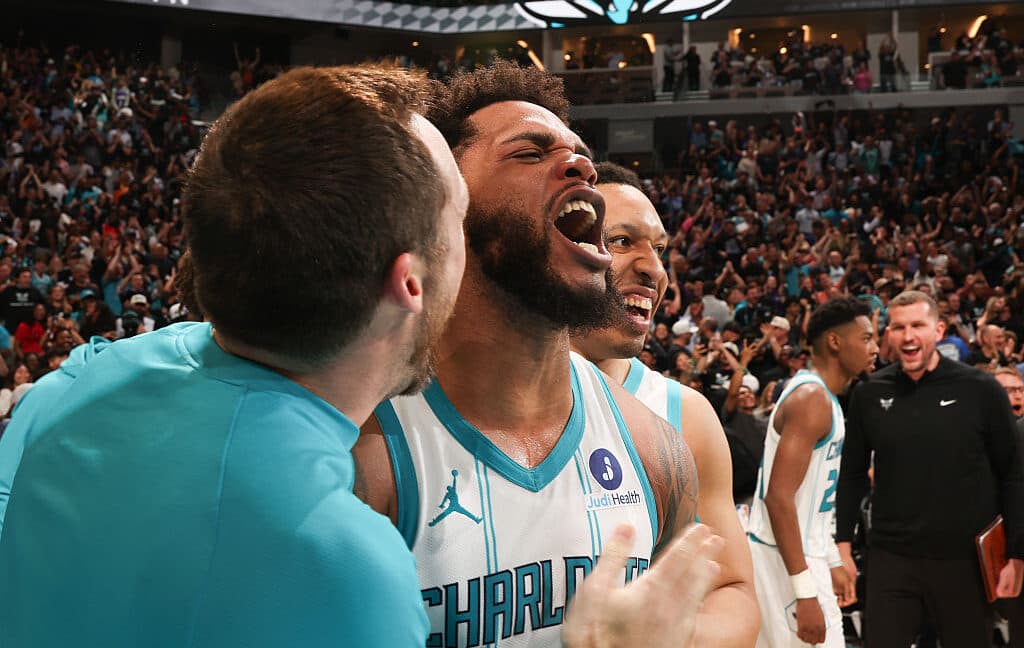
If you were watching the Heat–Hornets play‑in game on Prime Video, you didn’t just witness a clutch overtime finish—you also witnessed a very 2026 kind of failure. Instead of live basketball, fans got a full‑screen “technical difficulties” sign at the most important moment of the night. In a world where tech giants are buying up exclusive rights to the last must‑watch content on TV, those two missing minutes matter a lot more than one regular-season possession. In this piece, we’ll look at what actually happened, why it should worry every sports fan, and what it says about the future of streaming, regulation, and live events.
The news in brief
According to Ars Technica, which in turn cites reporting from ESPN, Amazon’s Prime Video stream of the NBA play‑in matchup between the Miami Heat and Charlotte Hornets on 14 April cut out just as the game went into overtime. Viewers suddenly saw a generic “technical difficulties” screen, and the announcer’s commentary was abruptly cut mid‑sentence.
The outage lasted for almost two minutes of real time and roughly 22 seconds of game clock. During that window, fans missed a key Hornets possession that included a basket from LaMelo Ball. When the feed returned, the game had moved on.
Prime Video held exclusive broadcast rights for this matchup in the US, meaning there was no legal backup video source—only in‑arena attendance or certain radio broadcasts. An Amazon spokesperson told ESPN that a hardware failure in the production truck caused the loss of feed and said the company is conducting an internal review.
Why this matters
At first glance, a 22‑second gap might seem minor. Sports fans know that glitches happen on traditional TV too. But this incident hits at the exact pressure point of the streaming era: trust.
Leagues like the NBA, NFL, and global football competitions are increasingly signing exclusive deals with tech platforms—Amazon, Apple, YouTube, DAZN—because that’s where the money and younger audiences are. In return, fans are expected to pay for more subscriptions, accept app‑only access, and live with extra latency compared to cable. The unspoken promise is that, in exchange, they get a modern, flexible experience that “just works.”
When the only legal way to watch a game fails at the decisive moment, that promise collapses. There is no channel to switch to, no antenna fallback, no bar down the street with a different feed. One vendor, one app, one point of failure.
The episode also revives a more subtle complaint that has dogged Prime Video’s sports coverage for years: quality issues that never fully go away. As Ars notes, fans and commentators have long complained about audio being ahead of video on Prime’s NFL streams, and the same desync is now showing up in NBA coverage. That’s not a catastrophic outage; it’s something worse for loyalty: chronic annoyance.
The losers here are obvious: fans who paid for access, leagues whose product looks cheapened, and advertisers whose spots run inside an experience people now associate with unreliability. The short‑term winner is… nobody. Over time, though, this kind of fragility could benefit competitors still offering hybrid distribution—broadcast plus streaming—and push regulators to look more closely at the resilience of exclusive online rights.
The bigger picture
This isn’t happening in a vacuum. Over the past five years, live sports have become the main battlefield of the streaming wars.
In the US, Amazon took over Thursday Night Football, YouTube grabbed NFL Sunday Ticket, Apple bought global rights to Major League Soccer, and Peacock and Paramount+ keep experimenting with playoff games behind streaming paywalls. Every one of those shifts has had its own set of technical hiccups: overloaded servers, login failures, wildly variable picture quality.
Europe has lived this for even longer. Fans of Serie A, La Liga, and the Bundesliga can recite a litany of DAZN and local‑OTT outages during big matches. Each time, providers promise better infrastructure, more redundancy, smarter CDNs. Yet, under the stress of a high‑stakes moment—overtime, penalties, playoffs—the weakest link still tends to snap.
Technically, live sports streaming is one of the hardest things you can do on the Internet: millions of concurrent users, strict timing requirements, complex production chains involving on‑site trucks, encoders, satellite uplinks, multiple CDN partners, and a zoo of client devices from smart TVs to old phones. A single misconfigured encoder or dead piece of truck hardware can bring the whole thing down.
But fans don’t care about any of that—and they shouldn’t have to. They compare the experience to what they had with satellite or cable, which, while far from perfect, has decades of operational maturity behind it. When a tech giant that can run hyperscale cloud services fails at 22 seconds of basketball, it undercuts the entire sales pitch that Silicon Valley can do TV better than the old guard.
This blackout also strengthens the argument that leagues may have pushed “digital first” too fast. The more exclusive the deal, the more catastrophic the impact of a failure. Some sports bodies, like the NFL with its mix of OTA, cable, and streaming, may look smart for keeping multiple distribution paths alive.
The European and regional angle
For European viewers, this NBA glitch is a mirror of their own daily frustrations. Amazon is not just a US sports player: it has held slices of Premier League rights in the UK, Champions League rights in Germany and Italy, Ligue 1 and Roland‑Garros in France, and various tennis and rugby properties elsewhere. When something breaks, millions across the continent feel it.
EU regulators may eventually have a say. While the Digital Services Act and the Digital Markets Act don’t directly regulate sports quality, they do push gatekeeper platforms toward greater transparency and accountability. If a dominant platform routinely fails to deliver paid live content, particularly when it holds exclusive rights, you can imagine consumer‑protection authorities asking tough questions about refunds, service levels, and contractual obligations.
There’s also a cultural dimension. In many European countries, key national matches are protected on free‑to‑air TV lists. The NBA and US leagues are different—they’re premium imports—but the same underlying issue applies: should any one tech company be allowed to put crucial moments of culturally significant sport behind both a paywall and a fragile technical stack?
Smaller markets, from Central Europe to the Nordics and Balkans, are especially exposed. Fans already juggle multiple niche services to follow domestic leagues, the Champions League, and US sports. Each exclusive deal adds not just cost but risk: will the stream hold when it matters most, or are you paying for a spinning buffer icon?
Looking ahead
Amazon will almost certainly publish (or at least share with partners) a root‑cause analysis of this outage and quietly harden its workflows before the NBA playoffs intensify. Expect more redundancy in on‑site production, better failover paths between trucks and cloud encoders, and more aggressive monitoring of audio‑video sync.
But the strategic questions won’t go away. Leagues have to decide how much technical risk they’re willing to tolerate in return for big cheques from tech companies. Fans will increasingly ask why, after a decade of cloud hype, the reliability of their most important games feels worse than the satellite dish their parents used.
Watch for a few things over the next 12–24 months:
- Contract language: do we start hearing about minimum uptime guarantees, penalties for outages, or mandatory simulcasts on traditional TV for playoffs and finals?
- Regulatory interest: do EU and national regulators treat repeated streaming failures as a consumer‑rights issue, especially when no alternative exists?
- Fan behaviour: if trust erodes, some will drift back to illegal streams, radio, or social highlights—none of which are what rights‑holders want.
There is also a brand risk for Amazon. Prime Video has grown from a bundle add‑on into a serious studio and sports player. If high‑profile gaffes become a meme, that may not directly kill subscriptions, but it weakens Amazon’s credibility in its next round of billion‑dollar negotiations.
The bottom line
Prime Video’s NBA overtime blackout is not just an embarrassing glitch; it’s a case study in the fragility of the all‑in streaming model for live sports. When a single platform holds exclusive rights, technical failure becomes a denial of access, not a temporary annoyance. Unless tech giants and leagues rethink redundancy, transparency, and distribution, fans are right to ask a simple question: why are we paying more for a worse safety net than we had with old‑school TV?