Intel’s Wildcat Lake chips fix the wrong problem for mainstream laptops
Intel’s latest non-Ultra Core Series 3 processors finally give budget and midrange laptops genuinely new silicon instead of reheated leftovers. That’s a big deal for battery life and thin-and-light designs. But at the same time, these chips sit well below Microsoft’s Copilot+ AI threshold, creating a new class divide in the Windows ecosystem: “modern, efficient, but officially not AI enough.” In this piece we’ll unpack what Intel is really optimizing for, why Microsoft’s 40‑TOPS line in the sand matters, and what this means for buyers, PC makers and regulators—especially in Europe.
The news in brief
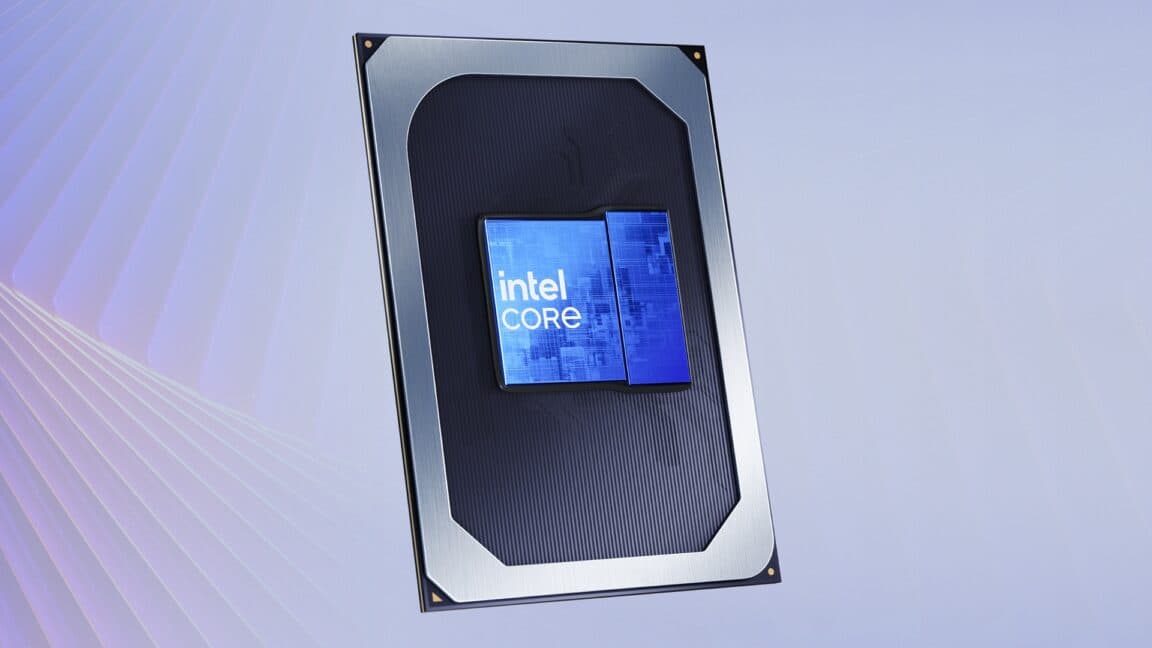
According to Ars Technica, Intel has introduced a new generation of non-Ultra laptop CPUs under the Core Series 3 brand, built on fresh silicon rather than the older Raptor Lake design it has reused for years. The family, codenamed Wildcat Lake, targets 15 W thin-and-light notebooks.
Each chip uses two tiles: a compute tile produced on Intel’s 18A process and a separate platform controller from an external foundry. The compute tile integrates up to two performance cores (Cougar Cove), four efficiency cores (Darkmont), an Xe3 integrated GPU with one or two cores, and an NPU rated up to 17 TOPS. Connectivity includes up to two Thunderbolt 4 ports, Wi‑Fi 7, Bluetooth 6.0 and PCIe 4.0 lanes, with support for up to 48 GB LPDDR5X‑7467 or 64 GB DDR5‑6400.
Intel claims notable battery gains versus older 12th/13th‑gen-based laptops, citing up to 18 hours of 1080p video playback on a 59 Wh system. However, the NPU falls well short of the 40 TOPS required for Microsoft’s Copilot+ PC branding, so devices with these chips will miss out on some on‑device AI features.
Why this matters
Wildcat Lake quietly reverses a trend that has frustrated laptop buyers for years: Intel shipping obviously outdated silicon into new “budget” machines. For once, lower-priced notebooks get access to the same cutting-edge manufacturing node—Intel 18A—as the flagship Panther Lake Core Ultra chips, just with fewer cores and more modest performance.
The immediate winner is battery life. Under 20 W, process improvements matter more than raw core counts. By bringing 18A down the stack, Intel can help OEMs build genuinely all‑day ultraportables at €600–€900, not just at premium prices. For students, remote workers and fleet buyers, that may be more valuable than chasing another 10% in benchmark scores.
The losers, paradoxically, are users who actually care about Microsoft’s AI roadmap. At 17 TOPS, these chips are deliberately engineered to be good enough for light local inferencing (background blur, dictation, simple copilots), but not good enough to qualify as Copilot+ PCs. OEMs get a neat segmentation tool: if you want the “AI PC” label and Windows’ headline AI features, you pay for Core Ultra or rival high‑TOPS silicon.
This creates a new kind of fragmentation. Until now, Windows features mostly depended on OS edition and RAM, not on specific on‑chip AI throughput. With Copilot+, Microsoft is turning the NPU into a gatekeeper. Intel’s decision to keep Wildcat Lake well under 40 TOPS tacitly endorses that segmentation.
From Intel’s perspective, it’s rational: AI compute is expensive in area and power. For mainstream laptops, efficiency, thermals and BOM costs trump the marketing value of a badge. But it does mean we’re entering an era where two brand‑new Windows laptops can offer visibly different experiences, even at similar prices, purely because one NPU crosses an arbitrary threshold and the other does not.
The bigger picture
Wildcat Lake sits at the intersection of three major industry shifts.
1. Intel’s manufacturing comeback strategy. Getting 18A into mass-market chips is strategically crucial. Intel needs volume to prove its process leadership story to both investors and potential foundry customers. Shipping the node not only in halo products but also in everyday laptops helps counter the narrative that “real innovation” only happens at Apple, TSMC and Qualcomm.
Historically, Intel often pushed new processes first into low-core-count mobile and server parts because they’re easier to yield. Wildcat Lake follows that playbook, but in a more transparent tile-based form: cutting compute scale while keeping the same fundamental technology.
2. The AI PC land grab. Microsoft, Qualcomm and to a degree AMD are trying to redefine the PC around AI. Snapdragon X and upcoming AMD Strix Point designs heavily lean on NPUs that comfortably exceed the 40‑TOPS bar. Intel’s Panther Lake will join them at the high end.
Wildcat Lake, however, chooses a different path: accept being “below the AI line” and win on cost and efficiency instead. That’s reminiscent of how Intel once used Celeron and Pentium brands—same architecture, trimmed features—to hit price bands without destroying premium margins. Only this time the cut feature isn’t cache or PCIe lanes, it’s AI compute.
3. The return of meaningful iGPU progress. Two Xe3 GPU cores may not sound like much, but they mark another small step away from the era where integrated graphics were an afterthought. For mainstream users, upgrades in media engines, display outputs and basic 3D capability often matter more than one more CPU core.
Compare this with Apple’s approach: from the cheapest MacBook Air to the MacBook Pro, you get the same architecture and broadly similar feature sets, only scaled up. Intel is inching in that direction with process parity across tiers, even if Microsoft’s Copilot+ rules now introduce fresh fragmentation on the software side.
The European / regional angle
For European buyers, the Wildcat Lake story intersects with three recurring themes: energy efficiency, privacy, and procurement.
First, power efficiency isn’t just nice to have in the EU; it’s policy. Between rising electricity costs and ecodesign rules, OEMs selling into Europe are under pressure to deliver lower-consumption devices that also last longer on battery. A 15 W platform on a cutting-edge node is well aligned with that agenda—and far more relevant to schools and administrations than whether the NPU hits 40 TOPS.
Second, some of the Copilot+ exclusives, especially Windows Recall, already raised red flags among European regulators and privacy advocates. Storing a rolling photographic history of everything on your screen collides uncomfortably with GDPR principles like data minimisation and purpose limitation. The fact that Wildcat Lake machines cannot run these features locally may, ironically, make them easier to deploy in privacy‑sensitive sectors such as healthcare, public administration or legal firms.
Third, Europe has a vibrant niche of smaller PC vendors—TUXEDO and Schenker/XMG in Germany, Slimbook in Spain, various Linux-focused boutiques—who care more about open drivers and thermals than about Microsoft’s marketing labels. For them, a cool, efficient Intel 18A chip with decent iGPU and a modest NPU is an attractive base for Linux laptops that don’t need Copilot+ at all.
Looking at the EU AI Act, the fact that more AI workloads can run on-device rather than in the cloud is generally positive for compliance and data sovereignty. But tying headline AI functionality to specific NPUs risks pushing buyers towards a small set of “approved” platforms—exactly the kind of gatekeeping Brussels is trying to avoid in other digital markets.
Looking ahead
Over the next 12–18 months, expect Wildcat Lake to become the default choice for mainstream Windows laptops: education devices, midrange consumer notebooks, and many corporate fleets. OEMs love clearly tiered silicon, and Intel is offering just that: Series 3 for “good battery life laptops,” Core Ultra for “AI PCs.”
Key things to watch:
- Pricing and positioning: If Wildcat Lake laptops land only €100–€150 below Copilot+ machines, buyers may feel pressured to “future‑proof” and overspend. If the gap is wider, Series 3 could dominate the value segment.
- How hard Microsoft leans on Copilot+ in marketing. If upcoming Windows releases start to hide or degrade experiences on non‑Copilot+ hardware, sub‑40‑TOPS chips may age poorly from a UX perspective, even if the hardware remains perfectly capable.
- AMD’s and Qualcomm’s responses in the same power band. AMD’s next-gen APUs and any lower‑power Snapdragon variants will clarify whether Intel is out on its own with this under‑40‑TOPS mainstream, or whether the industry converges on a similar split.
- Regulatory scrutiny: EU and UK regulators may eventually ask whether Microsoft’s AI feature gating is a technical necessity or a market‑shaping strategy.
There’s also an open technical question: how quickly will software vendors make real use of modest NPUs like the 17‑TOPS unit in Wildcat Lake? If most third‑party apps target a much higher baseline, these NPUs risk becoming underutilised silicon.
The bottom line
Wildcat Lake is a welcome shift: mainstream laptops finally get genuinely modern Intel silicon, with the battery life and efficiency gains that go with it. But by staying under Microsoft’s Copilot+ threshold, these chips also formalise a new hierarchy inside the Windows world—AI‑first PCs at the top, “good enough” machines underneath. For most people, the smart move will be to prioritise efficiency, thermals and price over an AI badge. The open question is whether Microsoft will let that remain a viable long‑term choice.