A year after killing off XPS in favor of an “AI PC” marketing experiment, Dell is back where many laptop buyers wanted it all along.
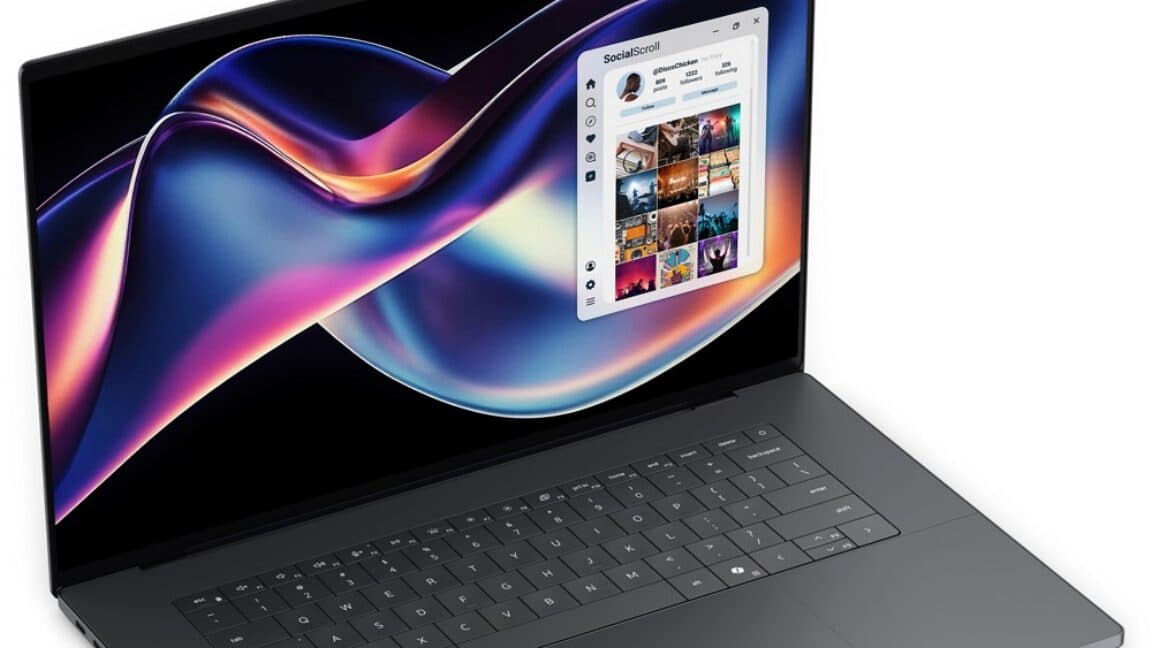
On January 6, 2026, the company relaunched the XPS brand with new 14- and 16-inch models and a very different message: less Copilot buzzword bingo, more focus on thin-and-light design, battery life, and displays.
From XPS to “Dell Pro Max” and back again
In January 2025, Dell made what now looks like an obvious misstep. It scrapped long-standing brands—XPS, Latitude, Inspiron, and Precision—and replaced them with three new labels: Dell Premium, Dell Pro, and Dell Pro Max. Each had base, Plus, and Premium variants.
The goal was to surf the “AI PC” wave. “The AI PC market is quickly evolving,” Kevin Terwilliger, VP and GM of commercial, consumer, and gaming PCs at Dell, told reporters at the time. Everyone from IT buyers to everyday users, he argued, was supposedly hunting for on-device AI, and Dell’s simplified lineup would make the right “AI PC” easier to find.
It didn’t land. XPS had spent years as one of the default recommendations for Windows ultrabooks—thin, light, well-built, and relatively fairly priced. Replacing a trusted name with generic-sounding tiers felt like throwing away equity just as PC demand and Dell’s own consumer revenue were already under pressure.
At a CES 2026 preview event in New York, Dell vice chairman and COO Jeff Clarke was blunt about the reversal: “It was obvious we needed to change.”
Undoing the worst XPS design experiments
The branding wasn’t Dell’s only course correction. The company is also walking back some of the more controversial design decisions it introduced with the XPS 13 Plus in 2022—designs that became the only XPS-style option in 2025.
Those machines borrowed heavily from the XPS 13 Plus template:
- A capacitive-touch function row instead of physical keys.
- A borderless haptic touchpad that visually blended into the palm rest.
- A flat, lattice-free keyboard stretching edge-to-edge.
On paper, the layout created more room for cooling and a cleaner look. In practice, it made the laptops feel unfamiliar and, for many, simply irritating to use.
The new XPS 14 and XPS 16 fix at least part of that:
- The physical function-row keys are back.
- The haptic touchpad stays, but Dell has restored clear left and right borders so you can see and feel where it starts and ends.
- The lattice-free keyboard remains, but Dell is already planning an escape hatch.
Later this year, the company will ship a cheaper XPS 13 with a more traditional chiclet keyboard—partly because those keyboards are cheaper to manufacture, but also because many buyers simply prefer them.
AI goes to the background
Dell’s 2025 messaging relentlessly pushed “AI PCs” as the reason to upgrade. This time, AI is more of a checkbox feature than a headline.
Clarke summed up the pivot in a statement accompanying the launch: “We’re getting back to our roots with a renewed focus on consumer and gaming.”
Visit the product pages for the new XPS machines and you’ll still see an obligatory nod to Microsoft’s Copilot+ PC program. But the emphasis is elsewhere: slim chassis, low carry weight, battery life, and display quality—the boring-but-critical basics most people actually care about when they drop a couple thousand dollars on a laptop.
That’s a notable shift not just for Dell but for the broader PC industry, which spent much of 2024 and 2025 insisting that on-device AI was the next must-have. Dell now seems to be conceding that users aren’t going to buy a bad laptop just because it can run a few AI models locally.
Pricing, availability, and what’s missing
The XPS 14 and XPS 16 are available starting today with premium pricing:
- XPS 14: starting at $2,049
- XPS 16: starting at $2,200
A Dell spokesperson says additional configurations will arrive in February and will come in “well under $2,000,” which should make the lineup more approachable for people who liked XPS for its balance of quality and value, not just its flagship specs.
There’s also a 2026 XPS 13 on the roadmap, but Dell hasn’t shared final specs, pricing, or an exact release date yet—only that it will use that more conventional chiclet keyboard.
Why this matters
For power users and everyday buyers alike, the XPS name meant something. So did the physical function keys, a trackpad you could feel without looking, and a keyboard that didn’t try too hard to disappear.
By walking back both the AI-first marketing and some of its more polarizing industrial design ideas, Dell is acknowledging a simple truth: the basics still sell laptops. People want machines that are comfortable to type on, predictable to use, and light enough to carry all day. If they also run AI workloads locally, great—but that’s a bonus, not the main event.
The XPS revival doesn’t guarantee Dell a bigger slice of a shrinking PC market. But it does show the company is still willing to listen when customers and reviewers vote with their wallets—and that might be the smartest move it’s made in years.