Swapping SIM cards used to be a 30-second job. Pop out the tray, drop in a sliver of plastic, and you were back online.
For Ars Technica senior reporter Ryan Whitwam, going eSIM-only in 2025 turned that muscle-memory ritual into an hour standing inside a T-Mobile store—and a reminder of how fragile our phone-number-based digital lives really are.
Whitwam’s story, published on December 29, 2025, is a rare thing in mobile tech: a hands-on review that ends in genuine regret.
From credit-card SIMs to soldered chips
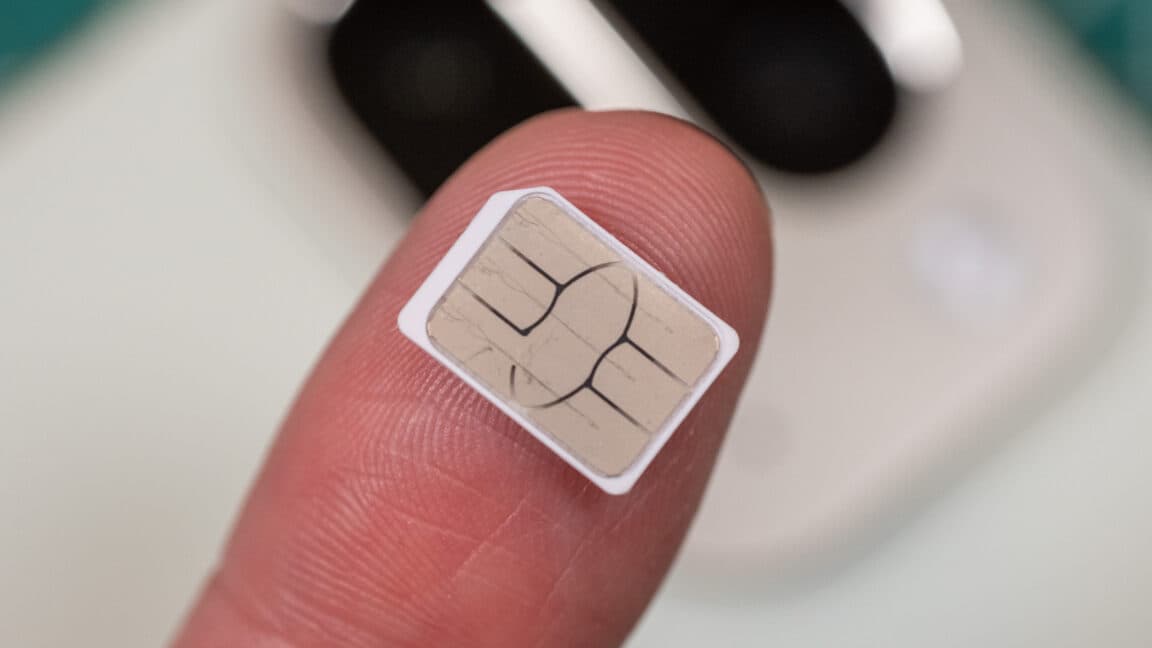
SIM cards have been around since the 1990s. They started as credit card–sized slabs of plastic. Then they shrank: miniSIM, microSIM, and finally nanoSIM, which is roughly the size of your pinky nail.
By the mid-2010s, even that felt too big for phone makers fighting for every cubic millimeter of space. In 2016, the eSIM standard arrived. Instead of a removable card, you get a programmable chip soldered to the motherboard. It:
- Stores multiple SIM profiles
- Lets you switch lines in software
- Takes about half the space of a SIM tray
- Can’t be physically stolen from your phone
That space savings is why OEMs are killing the slot.
Apple led the charge by forcing eSIM on US buyers with the iPhone 14. By the iPhone 17, you could see the trade-off on a spec sheet: the international model with a physical SIM has a smaller battery than the eSIM‑only version—about an 8 percent difference, Whitwam notes.
Google held out longer. But with the Pixel 10 series, US models finally dropped the physical slot and went eSIM‑only. Unlike Apple, though, Google didn’t use the freed-up space for a bigger battery or any obvious hardware upgrade. You lose the tray and get… basically nothing in return.
On paper, Android was ready for this. Google added system-level tools to download and transfer eSIMs. In theory, you scan a QR code or tap through a menu and you’re done.
In practice, Whitwam found out what happens when that process goes sideways.
Two eSIM failures in three months
As a phone reviewer, Whitwam has spent years swapping SIMs, sometimes daily. Across “countless device swaps,” he writes, a physical SIM never once caused a problem.
Then came the Pixel 10 review. Forced to give up his trusty nanoSIM, he moved his number to eSIM. In the three months that followed, he only needed to move that eSIM a few times—yet his number ended up stuck in limbo twice.
The first failure was annoying but fixable. He was already logged into T-Mobile’s app. After a few minutes of back-and-forth with support, the carrier pushed a fresh eSIM to his phone. No store visit, no major drama.
The second time was the real nightmare. This time, he wasn’t logged into the app.
When carriers need to verify your identity, they almost all do the same thing: send an SMS code. And if your eSIM is broken and your number isn’t active, those texts never arrive. No SMS means no login. No login means no way to request a new eSIM.
Whitwam’s only option was to drive to a physical T‑Mobile store so a human could provision an electronic SIM. What used to be “30 seconds of fiddling with a piece of plastic,” he writes, became about an hour of hanging around a retail counter.
That’s the core of his regret. Not that eSIM exists—but that carriers have wired everything around SMS in a way that collapses when your SIM, physical or virtual, fails.
Your phone number is a terrible master key
Many of us have had the same phone number for a decade or more. It’s not just how people reach us. It’s how services decide we are who we say we are.
Whitwam runs through the list: banks, messaging apps, crypto exchanges, his own publication’s CMS, and the carriers themselves all lean on SMS as a second factor. Those codes aren’t especially secure to begin with, but eSIM adds a new failure mode.
Lose access to your number and you don’t just miss calls. You can find yourself locked out of critical parts of your digital life.
With a physical SIM, hard failure is rare unless you actually damage the card. Swapping it between devices takes seconds and doesn’t require carrier intervention. As Whitwam puts it, a physical SIM is “essentially foolproof.”
By comparison, eSIM is software. Software can corrupt, transfers can glitch, and every fix depends on the very phone number that’s currently broken.
“Enshittification has truly come for SIM cards,” Whitwam concludes.
SMS as the root of trust has to go
The obvious answer is not “ditch multifactor authentication.” Your phone number is too powerful—and too vulnerable—to be left unprotected.
The real problem is that carriers use SMS as the master key for account access. When that key depends on a working eSIM, any glitch can strand you.
If the eSIM‑only future is inevitable, Whitwam argues there needs to be a better way to prove you own your number when things break. Anything is better than SMS as the default.
Google Fi shows it doesn’t have to be this bad
One bright spot in his piece: Google Fi.
With Fi, you can download an eSIM at any time via the app. Access is tied to your Google account, not to an already-working phone line. And Google’s account security is layered: Google Authenticator, passkeys, push notifications, and advanced protections for high‑risk users.
“That’s really as good as it gets for consumer security,” Whitwam writes. It’s still not perfect, but it means a flaky eSIM is less likely to lock you out of everything.
Is 8% battery worth all this?
Over the last decade we’ve watched phone makers rip out the headphone jack. Then the microSD card slot. Now they’re coming for the SIM tray.
On the iPhone 17, the payoff is roughly 8 percent more battery capacity. On the Pixel 10, there’s no visible hardware benefit at all. For some users, the convenience of remote provisioning will outweigh the risks.
But Whitwam’s experience is a warning for anyone who frequently swaps phones, travels with multiple lines, or relies on SMS‑based logins for work.
Before carriers finish killing off that “tiny bit of plastic,” they need to build account recovery that doesn’t depend on the very thing that just failed. Until then, a lot of us are going to miss that little nanoSIM tray more than we expected.