1. Headline & intro
HEVC was supposed to make 4K and HDR video boring—in a good way. Instead, it’s quietly becoming the weakest link in the modern PC experience. When Dell, HP, Synology and others start shipping hardware that can decode HEVC but choose to switch it off, something is fundamentally broken in how we license core media technologies.
In this piece, I’ll unpack what’s really going on behind the legal and licensing jargon, why Germany has become ground zero for codec wars, how this collides with Europe’s regulatory agenda, and why AV1 is not yet the clean escape route many hoped for.
2. The news in brief
According to Ars Technica, a wave of device makers are deliberately disabling HEVC (H.265) video support—even when the CPU or GPU hardware block is present and functional.
HP and Dell have turned off hardware HEVC on a range of laptops, reserving support for more expensive “premium” systems. Synology removed HEVC (and even AVC/H.264) transcoding from its NAS operating systems after a usage and cost review. In Germany, Acer and Asus currently cannot sell PCs due to a regional court decision that their machines infringe a Nokia HEVC patent.
Behind this sits a dense web of patent pools (notably Access Advance), direct licensors like Nokia, and royalty structures that differ depending on whether you sell chips, PCs, operating systems, or streaming services. The result: vendors fear stacked royalties and litigation, and some now push users to buy separate HEVC codec packs or fall back to less efficient formats. Ars Technica also notes growing industry interest in AV1 as a royalty‑free alternative, although that standard is itself under legal pressure.
3. Why this matters
The short-term impact is simple: people buy a new laptop or NAS and discover that 4K Netflix, Apple TV+ or iPhone videos either won’t play smoothly, won’t play in 4K/HDR, or require extra paid software. The bigger story is more unsettling: we’re watching a core internet technology—video compression—regress from “invisible plumbing” back into a visible, paid add‑on.
Who benefits? Patent holders with aggressive monetisation strategies and a few law firms in Munich and Texas. Who loses? Pretty much everyone else:
- OEMs and OS vendors face an impossible optimisation problem: ship HEVC broadly and risk being sued or overcharged; or disable it and ship a visibly worse product.
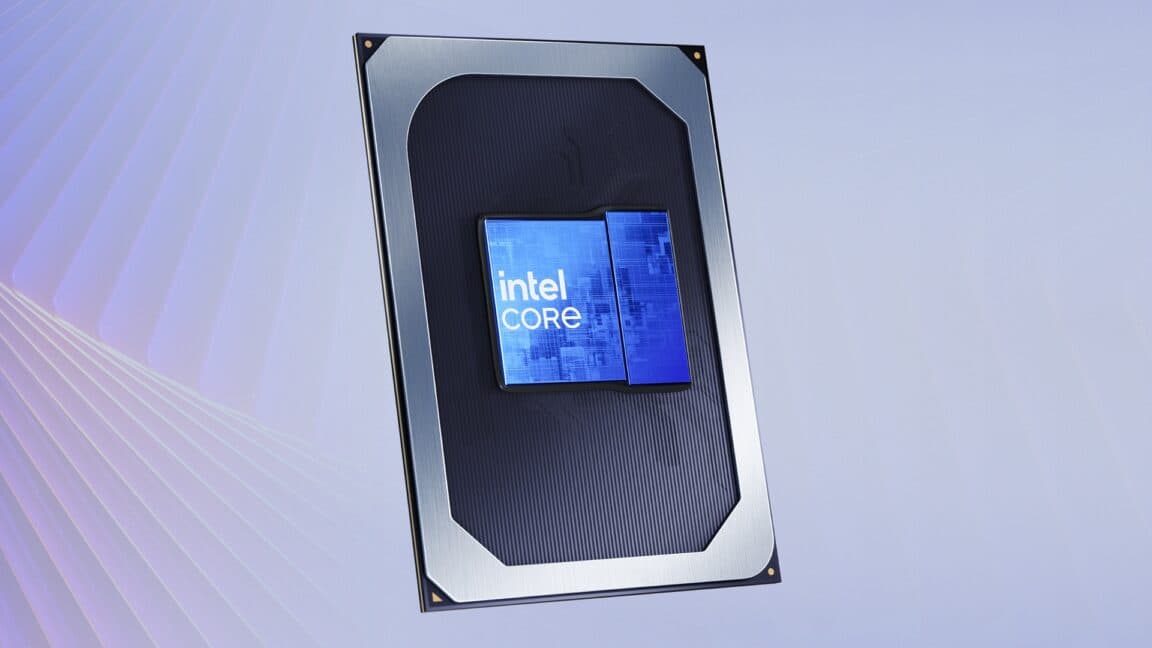
- Chipmakers invest in hardware blocks that OEMs then hide, reducing the value of their silicon.
- Consumers see fragmented support: VLC works, the browser doesn’t; the TV plays a file, the laptop chokes.
Economically, this is classic royalty stacking. Each patent owner behaves rationally in isolation, but the combined effect makes the technology uneconomical, especially in mid‑range and budget hardware where every euro counts.
Strategically, HEVC’s situation is now harming its own adoption. Vendors are incentivised to skip it entirely and go straight from AVC/H.264 to AV1 where possible, even if the transition is painful. The codec that promised a clean path to 4K is increasingly associated with legal risk, product uncertainty and bad user experiences.
4. The bigger picture
HEVC’s licensing mess isn’t an isolated glitch; it’s a replay of earlier battles with MPEG‑2, MP3 and even H.264—but with higher stakes because video now is the internet for many users.
Three broader trends converge here:
Standard-essential patents (SEPs) as a profit centre. Nokia, InterDigital, Ericsson and others have pivoted from being primarily equipment vendors to also being IP monetisation machines. Enforcement in venues like Munich, which is seen as patent‑holder‑friendly and fast, turns SEPs into powerful leverage. For PC OEMs, a single lost case can block entire product lines.
The rise of royalty‑free coalitions. The Alliance for Open Media (AOMedia) exists largely because of frustration with HEVC’s fragmented licensing. AV1, and later AV2, are industry’s attempt to front‑load the legal work and avoid toll booths entirely. Similar dynamics drove the adoption of Opus in audio and the push away from proprietary web technologies.
Hardware constraints vs. software ambitions. AV1 is technically more efficient, but it’s also more computationally demanding. That’s acceptable on a 2026 flagship TV or GPU, but not on low‑end phones, cheap laptops or set‑top boxes. Hence the awkward transition period: HEVC is politically toxic; AV1 isn’t yet universally practical; H.264 is creaking under 4K workloads but refuses to die.
Compared to competitors, Apple and some high‑end TV makers are better insulated because they control more of the stack and can quietly absorb licensing into device margins. Windows OEMs selling razor‑thin margin laptops in Europe cannot. That’s why you’re seeing HEVC disappear first in business and budget PCs, not in €2,000 ultrabooks.
5. The European / regional angle
Europe sits at the intersection of three forces: it’s a key market for PCs and streaming, a global centre of telecoms IP (think Nokia and Ericsson), and an aggressive regulator of digital markets.
Germany’s courts, particularly in Munich, have become a preferred venue for SEP enforcement. The ban on Acer and Asus PC sales over an HEVC patent is not a theoretical risk; it’s a live example of how IP strategies can reshape entire product portfolios in the EU. For smaller OEMs or white‑label brands targeting Central and Eastern Europe, the message is clear: either license broadly—at substantial cost—or de‑feature your hardware.
At the same time, Brussels is working on SEP regulation to increase transparency and prevent “hold‑up” and royalty stacking. Combined with the Digital Markets Act and Digital Services Act, there is an emerging view of codecs as part of digital infrastructure, not just a private bargaining chip.
For European users and ISPs, the codec war has very practical implications. More efficient codecs like HEVC or AV1 reduce peak traffic and energy use in networks—both crucial for EU climate targets and for operators in smaller markets, from the Baltics to the Balkans. Yet if HEVC is wrapped in legal uncertainty and AV1 dragged into similar disputes, Europe’s own policy goals around green digital infrastructure are undermined by its IP regime.
6. Looking ahead
Three trajectories seem likely over the next five years:
Quiet HEVC retreat on PCs. Expect more Windows OEMs to limit hardware HEVC to top‑tier models, ship some regions without support, or rely on user‑installed codec packs. Enterprise buyers will see it in fine print; consumers will only notice when 4K streaming misbehaves.
AV1 as the default for big platforms, not for everything. YouTube and Netflix already push AV1 aggressively where hardware allows. By 2028, most new mid‑range phones and TVs sold in Europe will decode AV1 in hardware. But budget devices and industrial/embedded systems will remain on H.264 or selectively on HEVC because they can’t afford the silicon or the legal complexity.
Regulatory intervention on SEPs. The EU’s forthcoming SEP framework could force more predictable royalty caps and mandatory disclosure of licensing terms. That won’t retroactively fix HEVC, but it might prevent HEVC‑style chaos for successor standards like VVC (H.266). If Europe defines a lighter‑weight, more transparent SEP regime, the centre of gravity for codec standardisation could shift away from de‑facto US/Asian control.
The biggest unknown is litigation around AV1. If courts start accepting claims that meaningful AV1 implementations inherently infringe non‑AOMedia patents, we could see a HEVC‑like royalty stack re‑emerge under a different name. That would be a worst‑case scenario: two standards, both encumbered, and no truly safe harbour.
7. The bottom line
HEVC’s licensing and litigation tangle has turned a mature, widely deployed codec into a liability that PC makers actively hide from their customers. In response, industry is racing toward AV1 and future royalty‑free designs, while European courts and regulators unintentionally shape the battlefield.
If video is now basic digital infrastructure, should it really depend on a legal minefield that makes vendors disable working silicon? Or is it time for regulators and standards bodies to treat codecs less like private toll roads and more like public roads—open, predictable, and boring again?