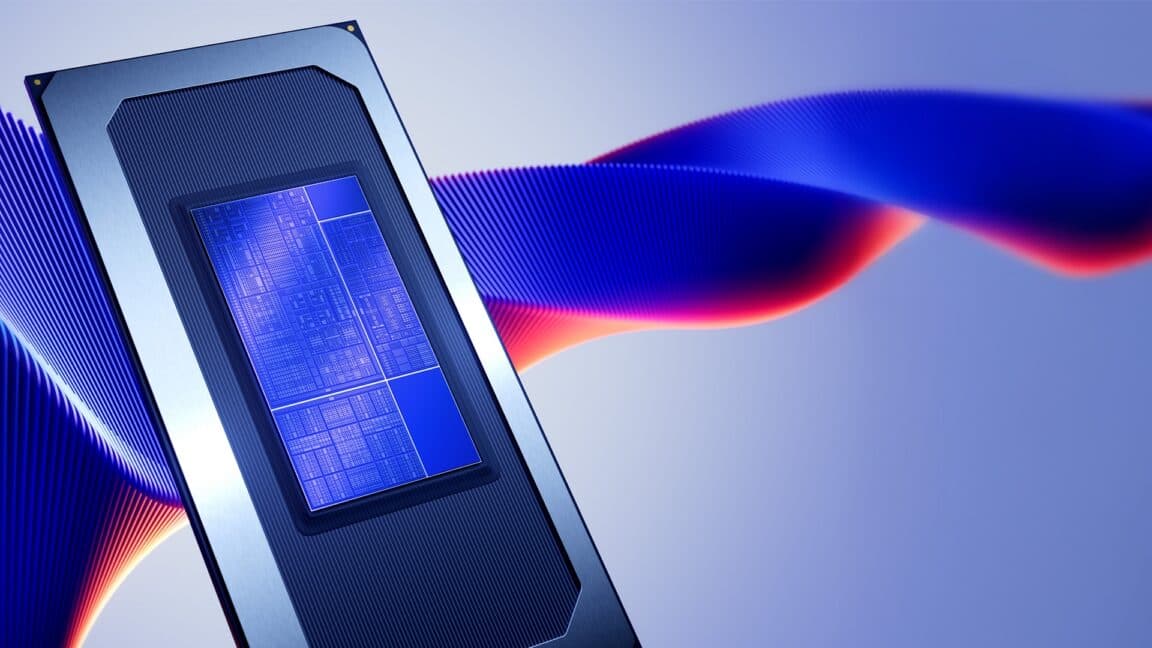
Intel is finally putting its long‑promised 18A manufacturing process into a shipping product. The first chips to get it are the new Core Ultra Series 3 laptop CPUs, codenamed Panther Lake, which start rolling out later this month.
Panther Lake: Intel’s 18A debut
Announced at CES, Core Ultra Series 3 is aimed squarely at high‑end ultraportable laptops. Intel says it’s launching 14 chips across five product families, and expects them to show up in “over 200” PC designs.
Key timing:
- First systems available: January 27, 2026
- More designs: throughout the first half of 2026
Panther Lake is the first client platform to use Intel’s 18A process, part of the company’s attempt to close the gap with TSMC and restart its foundry ambitions. But only the compute tile is on 18A; the rest of the chip is still a mix of Intel and TSMC silicon.
Backing off from Lunar Lake — but keeping its efficiency
Panther Lake effectively walks back some of the more aggressive choices Intel made with Lunar Lake (sold as Core Ultra 200V):
- Lunar Lake leaned heavily on chiplets manufactured mostly outside Intel.
- It used on‑package RAM instead of DIMMs or soldered memory.
- Intel also dropped Hyper‑Threading on the performance cores to save power.
Core Ultra 3 returns to a more conventional, modular laptop design: memory goes back to slots or solder on the board, and the platform looks more familiar to OEMs. Intel says it used Lunar Lake as the baseline for power efficiency, promising that Panther Lake’s performance bump won’t come at the expense of battery life.
Tiles, not monoliths: how Panther Lake is built
Like other recent Core Ultra chips, Panther Lake uses Intel’s Foveros 3D packaging to stack and stitch together multiple tiles on a base tile.
There are three main functional tiles:
Compute tile (18A)
- Houses CPU cores and the NPU
- Comes in 16‑core and 8‑core versions
Graphics tile
- 12‑core Intel Arc B390 GPU, built at TSMC, for the high‑end configs
- 4‑core GPU, built on Intel 3, for lower‑end parts
Platform controller tile (TSMC)
- Handles most I/O and connectivity
Intel mixes and matches these to create three main Panther Lake configurations:
- 16‑core CPU + 12‑core GPU
- 16‑core CPU + 4‑core GPU
- 8‑core CPU + 4‑core GPU
Everything else in the lineup is some form of these chips with CPU and GPU cores disabled.
The Core Ultra Series 3 stack
Intel is carving Panther Lake into several brands, all under the Core Ultra Series 3 label.
Core Ultra X9 and X7
These are the halo parts for ultraportables:
- Include all of Intel’s latest CPU and GPU architectures
- Ship with a fully‑enabled 12‑core Intel Arc B390 integrated GPU
- Support LPDDR5x‑9600 memory
They only offer 12 PCIe lanes, which makes them great for integrated‑graphics‑first designs, but a bit less ideal if you’re pairing them with a big discrete GPU.
Core Ultra 9 and 7
Same underlying tech as X9/X7, but tuned for systems that want stronger I/O and likely a dedicated GPU:
- 4‑core integrated GPU
- Memory support: LPDDR5x‑8533 or DDR5‑7200 DIMMs
- 20 PCIe lanes, up from 12 on the X‑branded chips
If you’re an OEM building a thin‑and‑light gaming laptop or creator machine with a discrete GPU, these are the more natural fit.
Core Ultra 5 (and one very weird SKU)
Core Ultra 5 spans a wide range and mostly covers lower‑end or midrange designs:
- Fewer CPU cores than the 7/9 tiers
- GPUs with 4 or 2 cores, depending on model
Then there’s the oddball: Core Ultra 5 338H.
- 12 CPU cores
- 10‑core Intel Arc B370 GPU
It sits somewhere between the more modest Core Ultra 5 parts and the fully loaded X‑series, and will likely show up in aggressively priced performance laptops.
Performance: big claims, many caveats
Intel is talking up sizable gains for the top Panther Lake chips compared to Core Ultra 200V (Lunar Lake):
- Up to 60% faster multi‑core CPU performance
- Up to 77% faster integrated GPU performance
For battery life, Intel cited a Lenovo IdeaPad reference design with a Core Ultra X9 388H, claiming it could stream 1080p Netflix for 27.1 hours. That’s a lab number on a reference platform; real‑world results will depend heavily on screen, battery size, thermals, and OEM tuning.
AI: 50 TOPS and Copilot+ ready
Every Panther Lake chip ships with the same NPU, rated at up to 50 trillion operations per second (TOPS).
That’s important for Windows AI branding:
- Microsoft’s Copilot+ PC label requires 40 TOPS from the NPU.
- Panther Lake clears that at 50 TOPS.
- Intel still trails the headline numbers from rivals: AMD’s Ryzen AI 400 series is claimed at 60 TOPS, and Qualcomm’s Snapdragon X2 at 80 TOPS.
AI workloads that can stick to the NPU should run efficiently, while heavier tasks can spill over to the CPU and GPU.
Connectivity and platform features
On the platform side, Panther Lake brings expected upgrades for 2026 premium laptops:
- Wi‑Fi 7
- Bluetooth 6.0
- Up to four Thunderbolt 4 ports
Combined with up to 20 PCIe lanes on some SKUs, that gives OEMs ample bandwidth for fast storage, external GPUs, and high‑resolution docks.
Why 18A matters for Intel
Panther Lake itself will live or die on laptop reviews later this year. But its real strategic significance is that it shows Intel’s 18A fabs are actually running.
The company is only about a month late versus the Panther Lake timeframe it floated in October—by Intel’s recent standards, that’s almost on time. If 18A delivers competitive density, power, and yields, it opens the door for the third‑party chip manufacturing strategy Intel started pushing nearly five years ago.
For now, Panther Lake is the proof‑of‑life product: a flagship laptop CPU family that mixes Intel’s newest process with TSMC silicon, leans into AI, and tries to reclaim performance leadership in the ultraportable space.