1. Headline & Intro
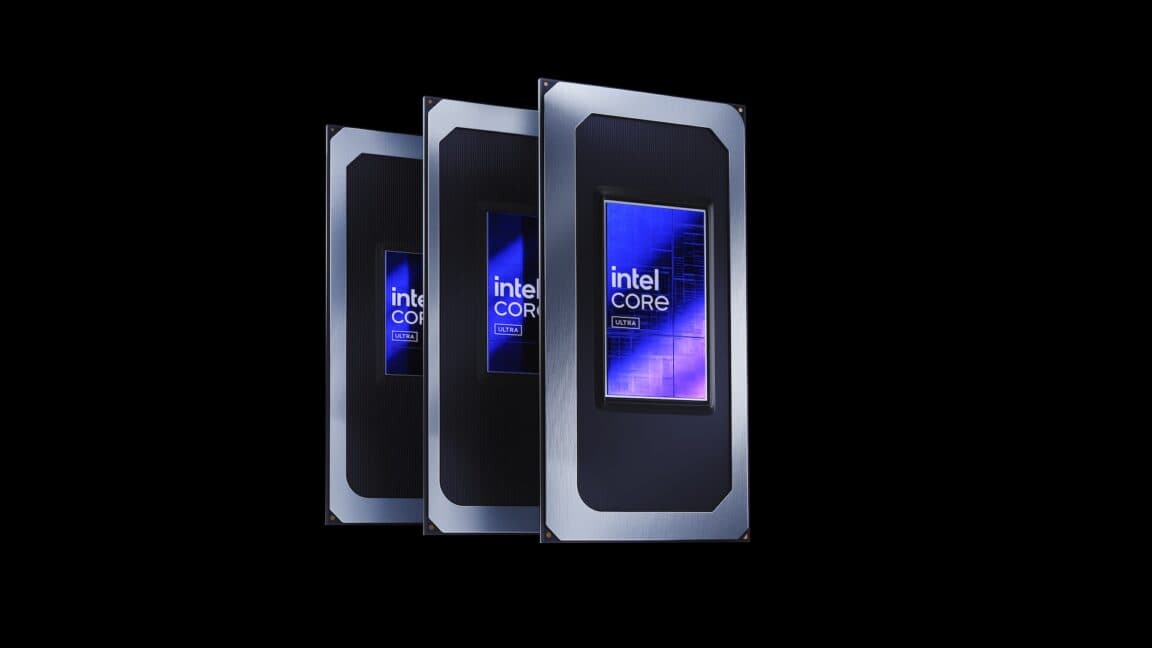
Intel’s next laptop chips, Core Ultra Series 3 "Panther Lake," were supposed to be the company’s big comeback moment in notebooks. Instead, they are debuting into a supply squeeze that says a lot about who really matters to chipmakers in 2026. According to Intel’s latest earnings, the company is selling every chip it can produce—but is deliberately steering capacity away from your next laptop and toward cloud and AI servers. In this piece, we’ll unpack what Intel’s choice reveals about the AI bubble, its manufacturing struggles, and what PC buyers and European OEMs should realistically expect this year.
2. The news in brief
As reported by Ars Technica, Intel’s Q4 2025 results showed flat revenue year-over-year—about $52.9 billion for 2025 versus $53.1 billion in 2024—with notable divergence between business units. The data center and AI division grew, while the client computing group (PC chips, Arc GPUs, and consumer products) declined.
On the earnings call, Intel executives acknowledged that they cannot currently produce or source enough chips to meet demand across all segments. Management said they are prioritizing internal wafer supply for data center products and shifting more consumer chip production to external foundries.
This comes just as Intel prepares to launch its Core Ultra Series 3 "Panther Lake" laptop processors, which rely in part on Intel’s new 18A manufacturing process. Yields on 18A are improving monthly but remain below management’s targets, further constraining supply. Intel expects Q1 2026 to be the low point for availability, with meaningful improvement in Q2.
3. Why this matters
Intel’s decision is rooted in cold financial logic. Data center and AI chips are growing and generate far higher margins than consumer CPUs. PC demand, in contrast, is softer and more price-sensitive. When your factories are constrained, you feed the business that pays best. From a shareholder perspective, it’s rational. From a user and OEM perspective, it’s a warning sign.
The timing is particularly awkward. Panther Lake is Intel’s opportunity to prove that Core Ultra is more than a branding reset: better efficiency for thin-and-light laptops, more capable AI accelerators, and a credible response to Apple Silicon, AMD’s mobile Ryzen, and Qualcomm’s Arm-based Windows push. If the chips are impressive but hard to buy—or only available in premium, low-volume designs—Intel risks squandering the generation that was meant to reset the narrative around its laptops.
PC makers are caught in the middle. High-end AI and server customers get priority supply, while notebook OEMs may face constrained allocations and higher CPU prices. That usually translates into fewer distinct models, slower regional rollouts, and laptops that stay expensive longer.
The client division also loses leverage. A hungry datacenter business can mask a weakened PC franchise on the income statement, but over time, disappearing sockets in consumer and business laptops create an ecosystem vacuum that competitors are eager to fill.
4. The bigger picture
This isn’t just an Intel story; it’s the clearest example yet of a broader realignment. First, it echoes how Nvidia has spent the last two years: hyperscale AI customers get priority, everyone else—from smaller clouds to researchers—is left scrambling. Now the same dynamic is hitting general-purpose CPUs.
Second, it exposes the tension in Intel’s new identity as both chip designer and foundry. To convince external customers to build on 18A and the future 14A process, Intel needs to demonstrate manufacturing reliability and ample capacity. Yet today, the company openly admits that 18A yields are still ramping and that it must ration internal supply between its own products. If you’re a potential foundry customer, you’ll ask a simple question: if Intel can’t fully feed its own PC division, how will it guarantee my roadmap?
Third, this is another chapter in Intel’s long struggle with process transitions. The report that 18A yields were in the low double digits last summer is uncomfortably reminiscent of the company’s 10 nm delays. The difference this time is that Intel no longer has the luxury of quietly fixing problems in the background. It has publicly staked its turnaround—and billions in government and customer confidence—on catching up in manufacturing.
In parallel, the product roadmap marches on: Granite Rapids for servers, Lunar Lake and Arrow Lake as Core Ultra Series 2 for clients, Panther Lake as Series 3, and the further-out Nova Lake architecture planned around the end of 2026. The risk is that Intel ships an impressive architectural portfolio, but manufacturing and allocation bottlenecks blunt their real-world impact.
5. The European / regional angle
For Europe, the supply squeeze lands at an awkward moment. Governments and enterprises are in the middle of aggressive digital and AI infrastructure projects, encouraged by initiatives like the EU Chips Act and various national AI strategies. Intel’s choice to prioritize data center products effectively favors European cloud operators and large enterprises over PC refresh cycles in education, SMB, and public administration.
Cloud providers and large hosters across the EU—especially those building AI clusters—may actually benefit in the short term. If Intel channels more 18A and advanced-node capacity into Granite Rapids and related server products, European data centers could see better access to new CPUs than consumer channels see to Panther Lake laptops.
On the other hand, European PC OEMs and channel partners could be squeezed. Higher CPU costs and uncertain availability complicate tender-based markets like schools, universities, and government IT, where contracts are awarded months in advance and price ceilings are tight. Combined with the EU’s energy-efficiency and right-to-repair regulations, a lack of new, efficient mobile CPUs makes it harder to hit sustainability targets while still delivering performance.
Finally, the move raises questions for Europe’s strategy of attracting Intel as a major foundry player. If Intel’s internal divisions are already fighting for wafers, European policymakers will look closely at whether promised capacity for local customers—especially under public subsidy schemes—will really materialize.
6. Looking ahead
In the near term, Intel’s own guidance suggests a familiar pattern: a painful Q1 2026, gradually improving supply from Q2 onward. Practically, that likely means Panther Lake showing up first in a narrow set of flagship designs and in limited regions, then trickling down to mainstream laptops toward the end of the year.
If demand for AI and server parts remains red-hot, Intel will stay tempted to siphon capacity away from PCs even as 18A yields improve. The biggest unknown is macroeconomic: if enterprise AI spending cools or proves less profitable than forecast, Intel may rediscover its affection for the steady, if boring, PC market.
For buyers, the strategy is simple: if you absolutely want a Panther Lake machine in 2026, plan for pre-orders or higher prices, and don’t assume wide availability in every configuration or region. Enterprises should avoid hinging their entire refresh strategy on this one generation; AMD-based systems or even Arm-based Windows laptops may offer more predictable delivery.
The other key milestone is Intel’s foundry customer announcements. Management expects clarity on external 14A customers from the second half of 2026 into early 2027. If, despite today’s constraints, big-name chip designers sign up, it will be a vote of confidence in Intel’s manufacturing trajectory. If they hesitate, it will confirm that the current bottleneck isn’t just a short-term hiccup but a credibility problem.
7. The bottom line
Intel’s Panther Lake launch being throttled by chip shortages is less a surprise than a symbol: in the AI era, the PC is no longer the favorite child. Prioritizing data center capacity makes financial sense, but it risks long-term erosion of Intel’s client franchise and raises hard questions for its foundry ambitions. For users and European policymakers alike, the key question now is simple: how much are we willing to pay—literally and strategically—to keep betting on Intel’s roadmap?