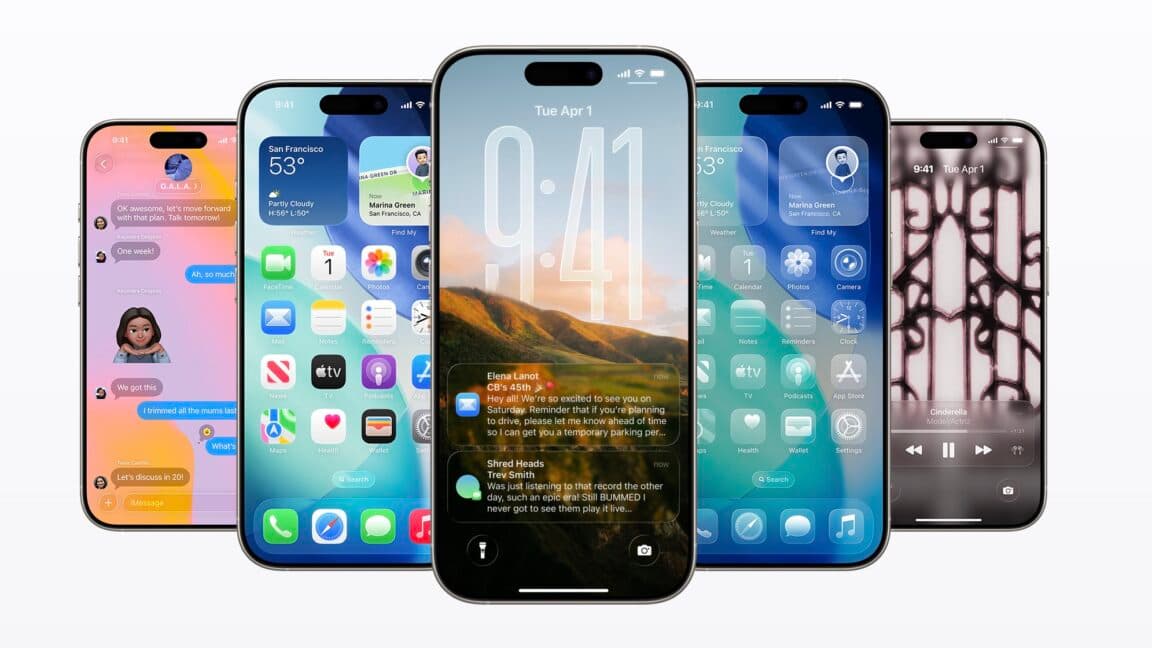
Reports over the past week painted a brutal picture for iOS 26: supposedly tiny adoption, blamed squarely on Apple’s flashy new “Liquid Glass” interface.
The story was irresistible: people hate the redesign so much they’re refusing to update. The problem is, the headline doesn’t quite survive contact with the data.
The scary numbers everyone latched onto
Analytics firm Statcounter is at the center of the drama. Its January numbers suggest:
- All versions of iOS 26: about 16.6% of active devices
- All versions of iOS 18: around 70%
- iOS 18.7 alone (released alongside iOS 26.0 in September): nearly one‑third of all iOS devices
On the surface, that looks like a revolt. Why jump to 26 when you can sit on 18.7 and avoid Liquid Glass?
But those numbers are being skewed by a quiet change Apple made in iOS 26.
Safari is lying about your iOS version
Most web analytics tools, including Statcounter, rely on the user agent string. That’s the line of text your browser sends to websites to say, “I’m Safari, on this OS version, on this hardware.”
User agents used to be pretty detailed. That’s handy for debugging and for deciding whether to serve a mobile or desktop layout. But it’s also great for fingerprinting—tracking you based on a unique combination of browser and device details.
So browser makers have been stripping detail out. And sometimes, they just lie.
On iPad, for example, Safari pretends it’s running on macOS, to force desktop‑style pages. On the Mac, Apple froze the macOS version in Safari’s user agent at 10.15.7 years ago, partly to reduce fingerprinting and partly because some sites broke when they saw “macOS 11” after decades of “10.x”.
With iOS 26, Apple did something similar for iPhone:
- Safari on iOS 26 still claims to be running on iOS 18.6 or 18.7 in its user agent.
- Only the Safari version number actually reflects the new OS: Safari 26.x runs only on iOS 26.
Developer Niels Leenheer documented the change and confirmed with Apple’s Karl Dubost that this is intentional, privacy‑motivated behavior.
So if you’re Statcounter, and you classify iOS versions based on what Safari tells you, you now have a big problem:
- Most iPhone users browse with Safari.
- Safari on iOS 26 tells you it’s on iOS 18.6/18.7.
- Only third‑party browsers like Chrome, Edge, and Firefox report “iOS 26” in the user agent.
What Statcounter is really measuring as “iOS 26 usage” is: people on Chrome (and other non‑Safari browsers) who have updated to iOS 26—not the full installed base.
That’s why the 16.6% figure looks so dire.
What a better data set shows about iOS 26
Ars Technica pulled traffic data from all Condé Nast sites (including Ars) and compared iPhone visits from:
- October–December 2024 (iOS 18 era)
- October–December 2025 (iOS 26 era)
Instead of trusting the iOS version in the user agent, they looked at the Safari version:
- Safari 18 on iOS 18 in 2024
- Safari 26 on iOS 26 in 2025
Key numbers for iPhone Safari pageviews:
- October (first full month after release)
- iOS 18 in 2024: about 25% of pageviews
- iOS 26 in 2025: about 22%
- December
- iOS 18 in 2024: about 76%
- iOS 26 in 2025: about 45%
Two things stand out:
- Early adopters didn’t bail. October 2024 vs October 2025 looks pretty similar. The first wave of upgraders didn’t run screaming from Liquid Glass.
- Mainstream adoption is slower. By December, iOS 18 had taken over three‑quarters of iPhone Safari traffic. iOS 26 was below half.
That’s a meaningful slowdown versus iOS 18. It’s nowhere near the disaster implied by Statcounter, but it’s not nothing either.
Context matters too:
- iOS 26 drops support for the 2018 iPhone XS, XS Max, and XR.
- iOS 18, by contrast, supported every iPhone that could run iOS 17.
So part of the lower share is simply: fewer eligible devices.
When Ars tracked iOS 18 over time, adoption:
- Hit about 80% by January 2025
- Crept up more slowly to roughly 91% by August 2025
Those figures roughly match Statcounter’s own iOS 18 numbers and Apple’s last published stats (Apple put iOS 18 at 82% of all iPhones as of June 2025).
If iOS 26 ends up in that same 80–90% band after a year or so, Apple probably shrugs and moves on. If it stalls clearly below that, then you’re looking at a more serious, sustained backlash.
We won’t know for a while.
Why you may need to update anyway
Even if you dislike Liquid Glass, there’s a more practical reason to move to iOS 26: security updates.
Since 2021, Apple has quietly shipped security fixes for the previous iOS version for a few months after a major release. That’s how we got iOS 18.7 alongside iOS 26.0 in September 2025—a way to get patches without committing to a whole new OS.
But that grace period always ends.
You can see the cutoff in Apple’s own security notes:
- iOS 18.7, 18.7.1, and 18.7.2 all apply to “iPhone XS and later.”
- iOS 18.7.3, released December 12, 2025, applies only to iPhone XS, XS Max, and XR.
That subtle wording change signals a bigger shift:
- Devices that can’t run iOS 26 (XS, XS Max, XR) keep getting 18.x security fixes.
- Devices that can run iOS 26 now need to be on 26 to stay fully patched.
That’s standard for iOS and iPadOS. It’s different from macOS, where even Macs that are eligible for macOS 26 Tahoe can stick with macOS 14 Sonoma or macOS 15 Sequoia and still receive security updates.
On iPhone, “I’ll just stay on 18 forever” isn’t really a safe long‑term plan.
How to tame Liquid Glass if you hate the look
If you held off on iOS 26 because of Liquid Glass, Apple has quietly added ways to make it less aggressive:
- iOS 26.1: adds a “Tinted” Liquid Glass option, boosting contrast and opacity to improve legibility.
- iOS 26.2: adds lock‑screen clock opacity controls, so your time isn’t floating on top of chaotic backgrounds.
- Safari settings: switching the Tabs view from “Compact” to “Bottom” makes the browser behave more like it did on iOS 18.
- Accessibility settings: extra sliders for motion and transparency can dial back the glassy, animated look across the system.
For hardcore Liquid Glass critics, those are half‑measures, not a full retreat. Apple hasn’t rolled back the design language; it’s just giving you some knobs to turn.
But if you’re on a modern iPhone or iPad and you care about security and app compatibility, iOS 26 is starting to look less like an optional style choice and more like the price of staying current.
The real story isn’t “everyone is fleeing iOS 26.” It’s that Apple’s own privacy moves briefly broke a major analytics data set—just as the company pushed one of its boldest visual overhauls in years. Liquid Glass might be polarizing, but the numbers so far show hesitation, not an outright boycott.