AI isn’t just eating GPUs. It’s chewing through memory, too.
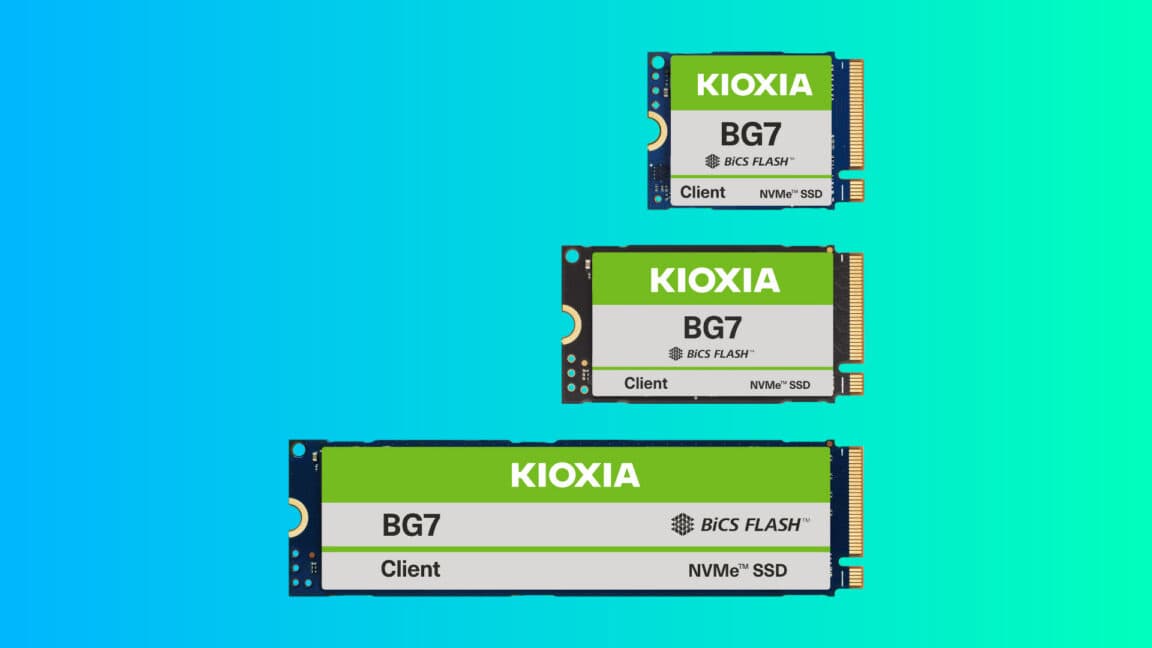
Japanese memory maker Kioxia says its flash output is effectively sold out for the rest of 2026, a warning shot for anyone hoping SSD prices might cool off soon.
Shunsuke Nakato, managing director of Kioxia’s memory division, told Korean outlet Digital Daily (via PC Gamer) that the company’s manufacturing capacity is spoken for through the end of 2026. That’s pushing both enterprise and consumer SSDs into what he called a “high-end and expensive phase.”
Nakato framed it bluntly: “There is a sense of crisis that companies will be eliminated the moment they stop investing in AI, so they have no choice but to continue investing.” As long as generative AI data centers keep soaking up DRAM and NAND, memory makers are in no rush to discount anything.
AI boom, memory crunch
Memory vendors across RAM and flash are enjoying record profits on the back of this AI wave. Training and running large models at scale demands enormous amounts of fast storage, both in data centers and at the network edge. That demand has outpaced how quickly manufacturers can add capacity.
Kioxia’s message matches what we’ve seen at retail: RAM prices have spiked fastest, but SSDs are following. Ars Technica’s recent price tracking found that higher-capacity SSDs are getting hit hardest. Both sticker prices and cost-per-gigabyte have risen more sharply for 2TB and 4TB drives than for 1TB models.
So even if you don’t care about AI, you’re paying for it when you buy storage.
New fabs won’t save 2026
Kioxia is trying to catch up. Nakato said the company is:
- Improving yields at its main Yokkaichi factory.
- Ramping another plant in Kitakami, which is expected to enter “full-scale mass production” this year.
Those are big moves, but they won’t fix 2026. The semiconductor playbook hasn’t changed: it takes years and billions of dollars to build new fabs, tune the process, and reach useful output. By the time extra capacity comes online, the market may already have shifted.
That lag is why chip shortages linger. Companies are also wary of overbuilding—nobody wants to be left holding warehouses of unsold NAND that has to be dumped at fire-sale prices if AI spending cools.
For now, the feedback loop is simple: data center operators fear falling behind in AI, so they keep ordering hardware; that keeps fabs booked solid; consumers and smaller buyers see higher prices and fewer deals.
What this means for your next SSD
If you’re planning a storage upgrade in 2026, assume today’s SSD prices are the floor, not the ceiling.
Budget-conscious builders and upgraders can still play this smarter:
- Prefer multiple smaller drives. Because 2TB and 4TB SSDs are seeing steeper price hikes and worse cost-per-gigabyte, buying two 1TB drives instead of a single 2TB may be cheaper, depending on your system.
- Use spare M.2 slots. Many desktop motherboards have two or more M.2 sockets. Adding a second drive is often easier and cheaper than replacing the primary one.
- Check your laptop carefully. Some larger gaming laptops include a secondary M.2 slot, but not all. In some models that extra slot only accepts shorter M.2 2240 drives instead of full-length 2280 sticks.
Secondary NVMe slots can also be slower than the primary one. Often, one M.2 socket is wired directly to high-speed PCIe lanes from the CPU, while others hang off lower-speed chipset lanes. That’s fine for most people. Any reasonably modern PCIe 3.0 or 4.0 SSD will feel fast for everyday use and gaming.
The bigger point: a slightly slower internal NVMe drive is still far better than trying to run modern workloads or 100+ GB games off external USB storage or sluggish SD and microSD cards.
No quick way out of the “expensive phase”
There’s no obvious catalyst that would suddenly free up flash and RAM in 2026. As long as AI data centers keep expanding and vendors stay booked out, SSD buyers should expect a prolonged period of higher prices—especially at the high end.
Kioxia spinning up factories in Yokkaichi and Kitakami is the start of the next capacity cycle. Relief will come, but on semiconductor timelines, not consumer wishlists.