1. Headline and intro
Laptop makers have spent a decade chasing thinner chassis and faster screens while quietly sacrificing the one thing mobile users actually feel every day: battery life. LG Display now claims it has found a way to give us both. Its new "Oxide 1Hz" laptop panels promise buttery-smooth 120 Hz animations when you need them, and a barely-ticking 1 Hz mode when you don’t. If this works as advertised, it could redefine how premium notebooks balance performance, endurance, and sustainability. In this piece we’ll look past the press release and ask: who really wins if 1 Hz laptops go mainstream?
2. The news in brief
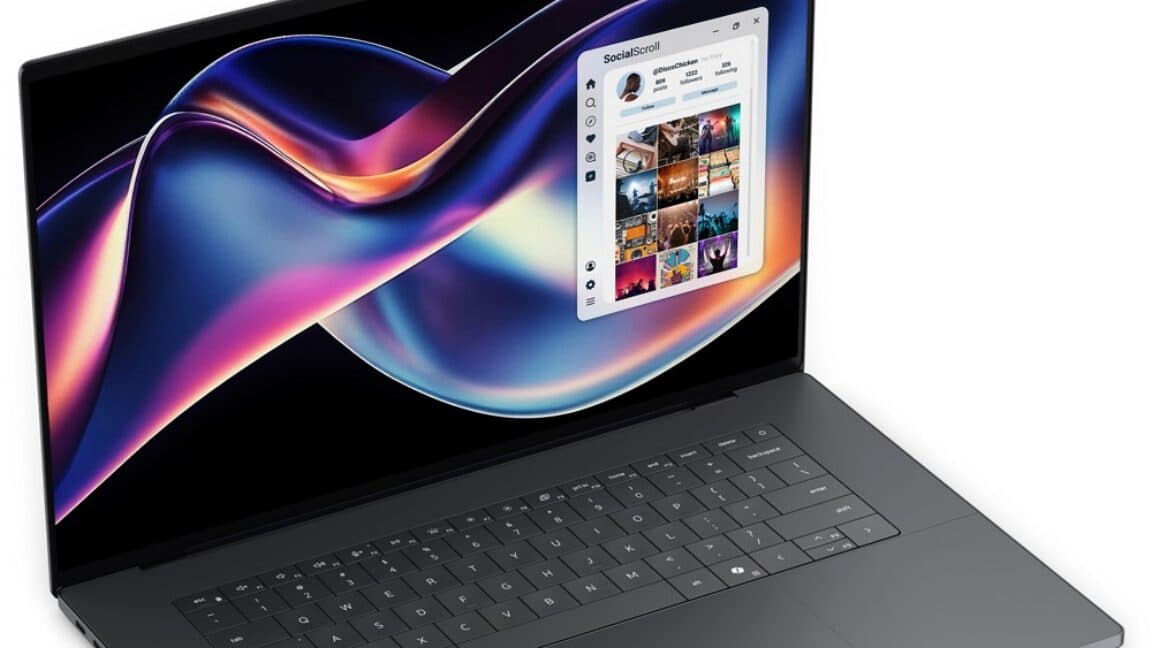
According to Ars Technica, LG Display has started mass production of new LCD laptop panels that can automatically vary their refresh rate between 1 Hz and 120 Hz, depending on what’s on screen. Branded "Oxide 1Hz", the panels drop to 1 frame per second for mostly static content—emails, documents, e‑books—and ramp up to as high as 120 Hz for video, gaming, or fast UI motion.
LG says it achieves this using new thin-film transistor materials with reduced leakage and proprietary driving algorithms. The company claims up to 48 percent longer usage on a single charge compared to current solutions, though real-world gains will depend heavily on workload.
The first shipping products are Dell’s 2026 XPS laptops, where Oxide 1Hz is the default display option. LG also plans an OLED version of the technology, targeted for mass production in 2027. A similar 1 Hz concept was jointly announced by BOE and Intel in late 2025, but those panels have not yet appeared in commercial devices.
3. Why this matters
Adaptive refresh is not a new idea, but bringing a smartphone-style 1–120 Hz range to mainstream Windows laptops is a big deal for three reasons: battery life, thermals, and user expectations.
First, energy. Displays are among the most power-hungry components in a laptop. Dropping a panel from 60 Hz to 1 Hz during static use doesn’t just cut panel power; it also reduces how often the GPU has to update the image. If LG’s up-to-48-percent improvement holds even halfway in typical office workloads, that’s effectively another battery generation for free—without increasing battery size or weight.
Second, thermals and noise. Less display and GPU activity at idle means less heat. That gives OEMs more headroom either to slim down the cooling system or to keep fans slower and quieter for the same performance. For ultraportables, this is strategically attractive: you can sell “all-day battery and silent operation” without sacrificing a high-refresh marketing bullet point.
Third, user expectations. 120 Hz (or higher) has become table stakes on premium phones, high-end tablets, and gaming laptops. Productivity laptops, especially in the business world, have lagged behind. Oxide 1Hz lets OEMs finally check the “120 Hz” box while telling IT departments and CFOs that battery life won’t tank.
Who loses? Panel competitors without similar tech will be under pressure, and GPU vendors may have to optimise their drivers faster than planned to keep up with ultra-low refresh transitions without glitches. Also, if OEMs use the headline efficiency gains as an excuse to shrink batteries further, users could see the promised endurance benefits eroded in practice.
4. The bigger picture
Oxide 1Hz fits into a broader trend: displays are becoming active power managers, not passive glass.
On phones, LTPO panels that dynamically vary refresh rates have been common on high-end models since around 2018. Apple markets this as ProMotion, Google as Smooth Display, Samsung as Adaptive. The core idea is the same: stop redrawing the screen 60 times per second when nothing is moving. LG is effectively transplanting that logic into the PC world—but on LCD, which still dominates laptops due to cost and burn-in concerns.
This also intersects with earlier experiments in the PC space. Intel’s Panel Self Refresh and variable refresh rate (VRR) already allow the GPU to idle more often, but typical laptop implementations float between 48 and 120 Hz rather than dropping all the way down to 1 Hz. And gaming-focused “dual mode” panels that switch between high-refresh/low-resolution and low-refresh/high-resolution require manual toggles. Oxide 1Hz removes the user from the loop and pushes the range much further.
Competition is coming. BOE and Intel have jointly showcased a 1 Hz-capable laptop display concept tied closely to Windows and Intel GPUs, hinting at a more platform-integrated approach. Samsung Display will not want to watch LG and BOE carve up the power-efficient laptop segment either—especially as OLED prices fall and HDR becomes more important.
Zooming out, this is another sign that innovation in PCs is moving away from raw CPU speeds and toward system-level efficiency: hybrid cores, smarter standby states, ARM-based designs, and now genuinely intelligent panels. The PC isn’t dead; it’s being re-architected around power budgets and battery constraints.
5. The European angle
For European users and policy makers, Oxide 1Hz is interesting not just as a gadget feature, but as an energy story.
The EU’s energy-labeling and ecodesign rules increasingly push manufacturers to reduce power consumption across the product lifecycle. Displays that can cut nearly half of panel-related energy use in common office scenarios align neatly with corporate sustainability targets and upcoming reporting requirements under frameworks like CSRD. A fleet of laptops that draws even a few watts less on average can meaningfully impact electricity bills in large organisations.
Europe’s strong privacy and security culture also tends to favour laptops that stay offline and unplugged more often—on trains, in cafés, during business travel. For knowledge workers in Berlin, Paris, Ljubljana, or Zagreb who live in office suites and browsers all day, a smarter panel that extends real-world runtime is more valuable than yet another CPU core.
There’s also competitive relevance. European OEMs and design houses that depend on Asian panel suppliers will need to decide whether to standardise on LG’s approach, wait for BOE/Intel solutions that may be better integrated with Windows, or explore niche European alternatives in e‑paper or reflective displays for ultra-low-power devices.
Finally, expect regulators to take notice. If dynamic refresh becomes widespread, it may eventually feed into stricter testing methodologies for laptop power consumption—ensuring that advertised energy savings match realistic mixed-use scenarios rather than best-case, 1 Hz-heavy workloads.
6. Looking ahead
Two big questions will decide whether Oxide 1Hz is a revolution or a footnote.
First, software integration. To really hit 1 Hz without jank, the OS, GPU drivers, and apps all need to cooperate. If animations stutter, cursors lag, or notifications feel delayed when the panel is in deep low-refresh mode, OEMs will be tempted to raise the floor to something safer, like 24 or 30 Hz—sacrificing part of the theoretical efficiency win. Watch what Microsoft does in upcoming Windows updates: better APIs for refresh control and smarter heuristics would signal that the ecosystem is taking this seriously.
Second, OEM behaviour. Dell deserves credit for putting Oxide 1Hz into its flagship XPS line as the base option rather than an obscure configuration tick box. But will others follow, or will we see the tech locked behind expensive upsell panels on top-tier models? Early 2027 will be telling, especially if LG’s OLED variant arrives on schedule and high-end creators’ laptops start offering 1–120 Hz OLED as a premium differentiator.
There are also risks. Panel complexity goes up, and with it the possibility of new failure modes—flicker, uniformity issues at 1 Hz, or firmware bugs in the switching logic. IT departments may be cautious until first-generation quirks are ironed out. And if competitors respond with proprietary, mutually incompatible solutions, developers could face a fragmented landscape of refresh-control behaviours.
Still, the direction of travel is clear: future laptops will treat refresh rate as a dynamic resource, just like CPU frequency and screen brightness.
7. The bottom line
LG’s Oxide 1Hz is more than a spec-sheet curiosity; it’s a credible attempt to make high-refresh laptops compatible with serious battery life and EU-style efficiency goals. If the industry and operating systems adapt, this could become the default for premium notebooks within a few years. The open question is whether manufacturers will use this progress to give us genuinely longer-lasting machines—or to justify even thinner laptops with the same mediocre endurance. When you buy your next notebook, will you prioritise the hertz number, or ask how smartly those hertz are used?