Nvidia went to CES 2026 without the one thing PC gamers were expecting: new GeForce hardware.
CEO Jensen Huang’s 90‑minute keynote was almost entirely about AI data centers. Gaming announcements were pushed to a separate video later in the evening, and they boiled down to one message: if you already own an RTX card, Nvidia wants to make it feel new with software.
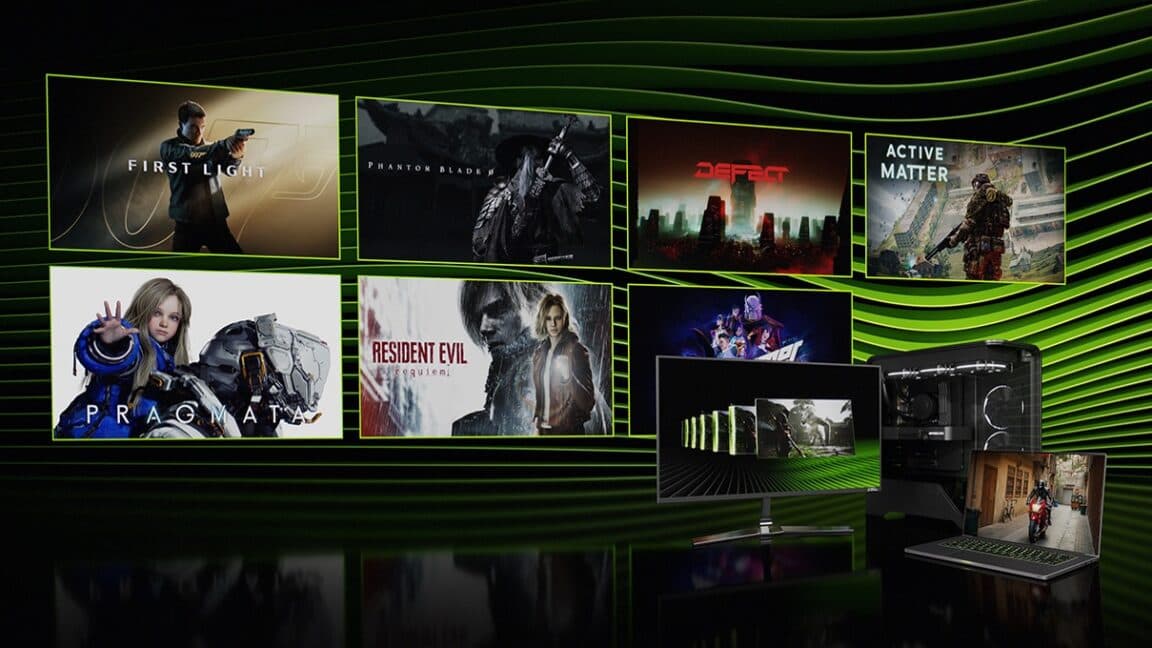
The company’s big play is DLSS 4.5 and a beefed‑up version of its Multi‑Frame Generation tech instead of the usual “Super” refresh of GeForce GPUs.
DLSS 4.5: a new transformer model for old and new cards
DLSS 4.5 introduces a new “second‑generation transformer model” for Nvidia’s upscaling tech. According to Nvidia, it’s been trained on an expanded data set to make better guesses when inventing pixels.
Bryan Catanzaro from Nvidia says the benefits are most visible in the Performance and Ultra Performance modes. That’s where DLSS has to stretch a relatively low‑resolution input into a 1440p or 4K output, so bad predictions are more obvious.
A few key points:
- The new transformer model works on GeForce RTX 20‑, 30‑, 40‑, and 50‑series GPUs.
- It’s available today via a driver update.
- You select it in the Nvidia App for games that already support DLSS upscaling (whether it shows up in in‑game menus is up to each developer).
So far, so good. But there’s a catch for older cards.
Performance hit on RTX 20 and 30 series
Nvidia is at least upfront that DLSS 4.5 costs more GPU time on older hardware. Owners of RTX 20‑ and 30‑series cards should expect a bigger performance hit from enabling the new model than users on RTX 40 or 50.
Early third‑party tests back that up. Mostly Positive Reviews compared DLSS 4.5 to the previous DLSS 4.0 transformer on an RTX 3080 Ti and saw performance drop by roughly 14–24 percent depending on the game and settings.
That doesn’t mean you should disable DLSS entirely. You’re still typically better off with DLSS 4.5 than trying to run the same game at native resolution on the same card. But it does underline the trade‑off: nicer image quality from a smarter model, paid for with a chunk of your frame rate if you’re on older silicon.
Multi‑Frame Generation: 6× mode and dynamic behavior
Nvidia is also expanding DLSS Multi‑Frame Generation (MFG), its tech that inserts AI‑generated frames between the ones your GPU actually renders.
Previously, MFG could generate up to three AI frames per rendered frame. With the new update, that jumps to five AI frames per rendered frame — a 6× mode in Nvidia’s terms.
Nvidia is layering something called Dynamic Multi‑Frame Generation on top of that:
- During demanding scenes, it increases the number of generated frames to keep the on‑screen frame rate high.
- In simpler scenes, it dials back the generated frames “so it only computes what’s needed,” saving GPU time and potentially reducing latency.
All the usual caveats still apply:
- Multi‑Frame Generation still requires an RTX 50‑series GPU.
- RTX 40‑series cards remain limited to generating one AI frame for every rendered frame.
- Older RTX cards can’t use frame generation at all.
- You still need a decent base frame rate to avoid input lag and visual artifacts.
In other words, MFG is a force multiplier for fast games, not a miracle fix for titles that are already struggling to hit a playable frame rate.
The new Multi‑Frame Generation features are due in spring 2026. Unlike the DLSS 4.5 transformer, they’re not shipping yet.
The missing piece: Reflex 2
There’s one obvious hole in Nvidia’s CES story: Reflex 2.
Reflex is Nvidia’s input‑lag reduction tech. At CES 2025 the company talked up Reflex 2 and claimed up to a 75 percent reduction in lag when using it on a 50‑series card — an important counterweight to any extra latency that upscaling and frame generation can introduce.
This year? Nothing. No ship date, no beta, no new demo.
For competitive players who care more about click‑to‑pixel latency than ultra‑high frame counters, that silence stands out.
Why there were no new GeForce GPUs
In a normal cycle, CES 2026 would have been prime time for a GeForce RTX 50‑series Super refresh — the kind of mid‑generation spec bump Nvidia used at CES 2024 to tidy up the RTX 40‑series lineup and improve the value proposition after a rocky, high‑priced launch.
Rumors had pointed to exactly that: a 50‑series Super line aimed at the 2025 holiday season with a big focus on memory capacity. The headline change was said to be a 50 percent RAM bump enabled by moving from 2 GB to 3 GB memory chips.
The rumored configs looked like this:
- GeForce RTX 5070 Super: 18 GB of RAM
- GeForce RTX 5070 Ti Super: 24 GB of RAM
- GeForce RTX 5080 Super: 24 GB of RAM
Assuming those leaks were accurate, the plan ran into a brick wall late last year: an abrupt spike in RAM prices and shortages, driven in part by massive demand from AI data centers.
That’s the key structural change behind Nvidia’s quiet CES for gamers. Modern‑day Nvidia is fundamentally an AI company that also sells consumer GPUs, not the other way around. If there’s a limited pool of cutting‑edge memory, the most profitable place to put it is on AI accelerators in data centers, not on mid‑cycle GeForce refreshes.
And it’s not just Nvidia tapping the brakes.
A quiet CES for dedicated GPUs across the board
None of the three big discrete GPU vendors used CES 2026 to launch new gaming cards:
- Nvidia stuck to DLSS and software.
- AMD talked about CPUs and platforms with improved integrated GPUs that draw from system RAM, but said nothing about new Radeon cards.
- Intel showed off better integrated graphics too, but hasn’t shipped a new Arc desktop card in almost a year, despite ongoing hints that a midrange Arc B770 exists and is close to launch.
The common thread: everyone’s happy to improve the graphics you get “for free” in CPUs and laptops, while the dedicated‑GPU market takes a breather.
Software carries the GeForce story—for now
So CES 2026 will be remembered as the year Nvidia tried to keep PC gamers interested with smarter software rather than fresh silicon.
DLSS 4.5 offers cleaner upscaling at the cost of some performance on older RTX cards. Multi‑Frame Generation is getting more aggressive with a 6× mode and dynamic behavior, but it continues to be locked to the newest, hardest‑to‑buy GPUs. Reflex 2, the missing puzzle piece for latency‑sensitive players, is still MIA.
Against a backdrop of RAM shortages and AI‑driven component demand, it’s clear why there’s no GeForce 50‑series Super line yet. The question for 2026 is whether better upscaling and frame generation are enough to keep PC gamers on Nvidia’s side while they wait for the next real wave of hardware.