Big Tech’s AI boom has turned memory into the most painful bottleneck of 2026. What started with eye-watering DDR5 prices is now spilling over into graphics cards, SSDs, and even old‑school hard drives.
Ars Technica’s Andrew Cunningham has been tracking the trend, and the numbers are ugly.
From RAM problem to full‑blown component squeeze
Data centers training large AI models are soaking up DDR5 and NAND at scale. That’s pushed standalone, direct‑to‑consumer RAM kits up by roughly 300–400 percent by the end of 2025. SSDs have also climbed, though more modestly so far.
Until recently, finished products—laptops, desktops, GPUs, SSDs from big OEMs—were partially insulated by existing inventory and long‑term supply contracts. That buffer is now thinning out.
The result: GPU lineups are being reshuffled, big‑name high‑capacity SSDs are getting scarce or absurdly expensive, and even hard drives are drifting upward in price.
GPUs: High‑end cards chase scarce GDDR7
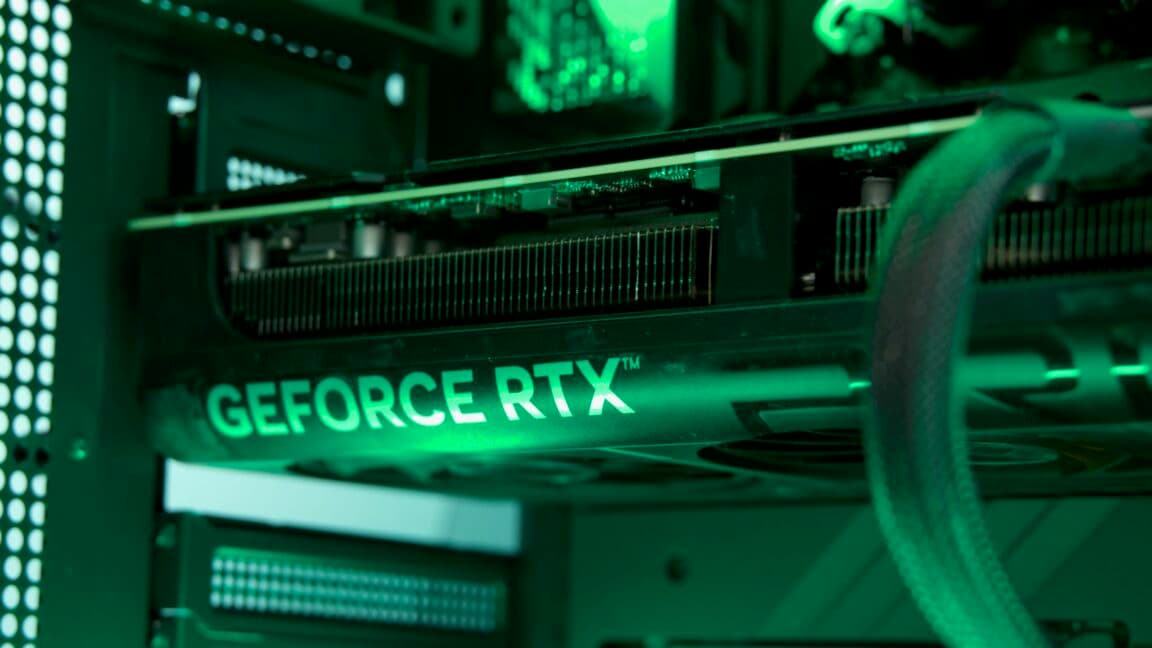
The most visible casualty so far is Nvidia’s GeForce RTX 5070 Ti.
Asus briefly announced that it was discontinuing its RTX 5070 Ti models before attempting to walk the statement back. Whether or not the card is really dead, the logic behind killing or deprioritizing it is straightforward in a memory‑starved market.
The RTX 5070 Ti uses:
- 16 GB of GDDR7
- A partially disabled version of Nvidia’s GB203 GPU
That’s the same chip and the same amount of RAM as the higher‑end RTX 5080.
On paper, the 5070 Ti carries a $749 MSRP, while the 5080 is a $999 card. If you’re a board partner, and you only have so many GB203 dies and 16 GB GDDR7 packages to go around, pushing more of them into 5080s is a simple way to increase revenue per unit of memory.
Street pricing makes the temptation even stronger:
- RTX 5070 Ti: about $1,050–$1,100 on Newegg
- RTX 5080: about $1,500–$1,600
Both are trading at least 40–50 percent above MSRP, and the 5080 can justify even more expensive boards, coolers, and power delivery. If your constraint is memory, not silicon, you chase the higher‑margin SKU.
Bottom line: it’s a rough moment to be shopping for a new 4K‑capable GPU that doesn’t lean hard on upscaling.
The midrange is still (mostly) sane
The good news: the crunch hasn’t fully swallowed the mainstream yet.
Current approximate street prices versus MSRPs:
- GeForce RTX 5070: ~$560–$570 (MSRP $549)
- Radeon RX 9070: ~ $580 (MSRP $549)
- Radeon RX 9060 XT 16 GB: around $400 (MSRP $349)
- GeForce RTX 5060: still sitting at its $300 MSRP
- Radeon RX 9070 XT: ~$730–$750 (MSRP $599)
We’ve moved past the end‑of‑2025 sweet spot where many of these cards dipped below MSRP, but we’re not yet back in the pandemic‑era nightmare of bidding against scalpers to pay 1.5× list for anything vaguely competent.
If you’re trying to stretch an older system without buying new RAM, a midrange GPU upgrade is still one of the less painful ways to improve gaming performance at 1080p or 1440p.
SSDs: High capacities get hammered
NAND flash has been on a similar trajectory.
As of last month, prices for 500 GB, 1 TB, and 2 TB SSDs were roughly double what they were in August 2025. That’s bad, but still milder than DDR5 kits, which are running three to four times their previous levels.
At the 1 TB level, things are uncomfortable but not catastrophic:
- 1 TB internal M.2 SSDs from recognizable brands generally fall between $120 and $150
- That’s somewhat higher than the $135 tracked for a 1 TB WD Blue in January, but not a total outlier
For 2 TB drives, value‑brand options can still look reasonable on paper:
- A decent 2 TB SiliconPower model is around $230
- That roughly matches the $230 price Cunningham recorded for a 2 TB Western Digital SN7100 in December
The real pain hits when you go after big‑name 2 TB and 4 TB drives.
Examples from major retailers right now:
- 2 TB WD SN7100 at Best Buy: $370, advertised as a “deal” down from a listed $490
- 2 TB Samsung 990 Evo Plus: $440, versus just $177 on Amazon in mid‑December in new condition
Four‑terabyte drives show the same pattern:
- SiliconPower UD90 4 TB: about $360
- Crucial P310 4 TB: about $345
- Equivalent Samsung and WD/SanDisk offerings: either much pricier or simply out of stock
In other words, if you’re willing to buy from smaller brands, you can still find semi‑sane deals at 2 TB and even 4 TB. If you’ve standardized on Samsung or WD for your builds, be prepared to pay a hefty premium or wait.
Even hard drives are drifting up
You’d expect spinning rust to be immune to an AI‑driven RAM and NAND shortage. For the most part, it still is—but the pressure is starting to show up here too.
Examples from current listings and historical CamelCamelCamel data:
- 6 TB WD Red NAS: up from $140 in August 2025 to about $160 now
- 4 TB WD Red and 4 TB Seagate IronWolf NAS: around $100, roughly in line with last year’s typical price, but the $80–$85 sale events that appeared several times in 2025 have vanished since September
- 12 TB Seagate IronWolf: up from around $240 to $270
- 16 TB IronWolf: up from roughly $330 to $350
Cunningham doesn’t expect hard‑drive pricing to go vertical the way RAM and SSDs have. There isn’t much RAM or flash inside a HDD, overall demand is lower, and hyperscale data centers mostly prefer 20–30 TB models over consumer‑grade 4–8 TB units.
But even modest price hikes in hard drives matter, because shortages and higher prices in one part of the storage stack can push buyers toward alternatives. That demand shift can keep HDD prices elevated even if the underlying bill of materials hasn’t changed much.
What PC builders should do now
If you’re planning a build or upgrade in early 2026, this landscape forces some trade‑offs.
Consider delaying high‑end GPU purchases. RTX 5070 Ti and 5080 cards selling 40–60 percent over MSRP are classic “only buy if you absolutely must” territory. Unless you have a specific professional need or money is no object, it may be smarter to ride out the worst of the crunch.
Aim for the mainstream GPU sweet spot. Cards like the RTX 5070, RTX 5060, RX 9060 XT 16 GB, and RX 9070 are still hovering close to list price and offer excellent 1080p/1440p performance.
Be strategic with SSD capacity. If you can live with 1 TB for now, prices—while inflated—are not outrageous for mainstream brands. For 2 TB and especially 4 TB, either:
- Accept a lesser‑known but well‑reviewed brand, or
- Hold off and watch for restocks and price corrections from Samsung and WD/SanDisk
Use price‑tracking tools. One subtle warning sign in Cunningham’s data is the disappearance of aggressive sale pricing, especially on hard drives. The nominal “regular price” may not have moved much, but the deals are gone. Tracking price history is the only way to know whether that $370 “discount” SSD is actually a bargain or just rebranded sticker shock.
The bigger story behind all of this is simple: AI workloads are now competing directly with consumers for the same memory and storage components. As long as that continues—and as long as capacity expansions lag demand—PC builders are going to be at the back of the line.