Raspberry Pi Is No Longer a $35 Computer – And That’s a Strategic Problem
The Raspberry Pi was never about raw performance; it was about the magic of getting “a real computer” for pocket money. That social contract has just been broken again. With RAM prices spiking due to the AI boom, Raspberry Pi is pushing through its second price increase in two months, and the high‑RAM models are now well into entry‑level PC territory. In this piece, we’ll unpack what’s happening in the memory market, why Pi’s position is more fragile than it looks, what this means for education, makers and industry in Europe, and what alternatives might quietly be waiting to steal its crown.
The news in brief
According to Ars Technica, Raspberry Pi Ltd has announced new price increases across much of its product line, driven by an ongoing spike in memory prices linked to AI demand.
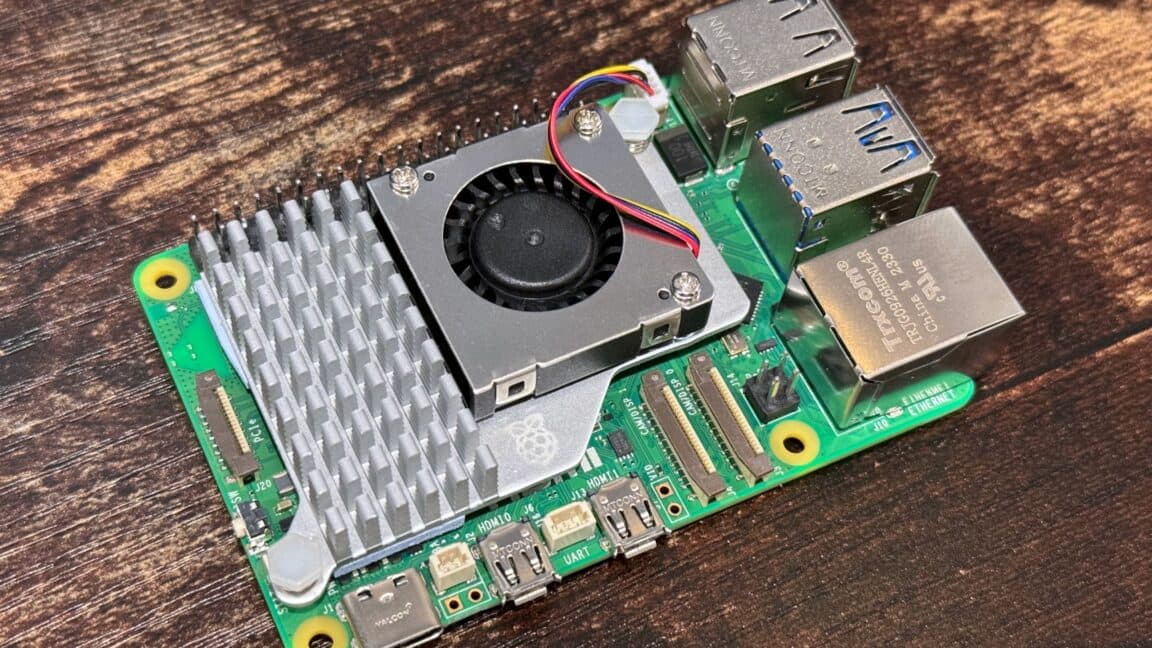
Most Raspberry Pi 4 and Raspberry Pi 5 boards with 2 GB or more of LPDDR4 RAM are affected, including the Compute Module 4 and 5 and the Raspberry Pi 500 keyboard PC. The uplift is tiered by capacity: 2 GB models become $10 more expensive, 4 GB models go up by $15, 8 GB boards increase by $30, and 16 GB versions jump by $60.
These rises come on top of general $5–$15 increases implemented for many Pi 4 and 5 variants in December, following smaller model‑specific hikes in October. The flagship 16 GB Raspberry Pi 5 will now cost around $205, while the 8 GB versions of the Pi 4 and 5 move to roughly $125 and $135.
Entry models remain unchanged for now: the 1 GB Raspberry Pi 4 and 5 stay at $35 and $45, as do the Pi 400 and older LPDDR2‑based boards like the Pi 3 and Pi Zero. Raspberry Pi’s CEO says the company intends to reverse the increases once memory prices normalise.
Why this matters
This is not just a story about a component shortage; it’s a story about identity and positioning.
Raspberry Pi’s entire brand was built around that iconic $35 promise. Even when higher‑end variants appeared, the baseline anchored expectations: a Pi is cheap, accessible and almost disposable. Once boards start landing in the $125–$200 range, the mental comparison shifts from “microcontroller‑plus” to “why not a used mini PC?”
Who benefits? In the short term, not many. Raspberry Pi protects its margins and avoids shipping hardware at a loss, which is necessary if it wants to keep investing in new designs and manufacturing capacity. Memory vendors benefit the most, riding the AI‑driven wave of demand that is pushing up DRAM and NAND prices across the board.
The losers are clear:
- Hobbyists and students, for whom a Pi was the default first Linux machine.
- Schools and NGOs, especially in lower‑income regions, that rolled out fleets of Pis because they were cheap, uniform and low‑power.
- Small industrial users, who chose Raspberry Pi for predictable pricing and long‑term availability.
At the system level, it creates friction: projects that assumed a €50–€70 bill of materials suddenly need to be redesigned or delayed. For education and maker communities, this could slow down experimentation exactly when interest in AI at the edge and home automation is exploding.
Most strategically, it erodes Pi’s moat. The higher the ASP creeps, the easier it is for x86 mini PCs, Arm clones (Orange Pi, Radxa, Banana Pi, etc.) and even old corporate thin clients to undercut it on value—even if they lack Raspberry Pi’s software polish and community.
The bigger picture
To understand what’s happening, you have to zoom out to the global memory market.
The current spike is fuelled by the AI arms race. Hyperscalers and chipmakers are hoovering up HBM, GDDR and conventional DRAM for training and inference clusters. When big customers are willing to sign multi‑year, high‑margin contracts, vendors reallocate production, and everything from laptop RAM kits to LPDDR for phones and single‑board computers gets squeezed.
We’ve seen versions of this movie before:
- During the pandemic PC boom, GPUs and consoles became unobtainable, and Raspberry Pi itself suffered severe shortages in 2022–2023.
- Earlier DRAM cycles (e.g., 2017–2018) also pushed up prices as vendors limited supply to restore profitability.
The twist this time is that AI demand looks more structural than cyclical, at least for the next few years. That makes it harder for a small player like Raspberry Pi to smooth out costs via hedging or long‑term contracts.
Competitively, the gap between a high‑end Pi and low‑end x86 hardware has never been smaller. On Amazon or AliExpress, you can find no‑name mini PCs with 8–16 GB of RAM and 256 GB SSDs in the €130–€200 band. They’re uglier, less documented and often power‑hungry—but they run full Windows or Linux, support standard containers and virtualisation, and don’t require you to rethink your stack.
On the other end, microcontroller boards (ESP32, RP2040‑based devices, Arduino) cover many “simple appliance” use cases at a tenth of the cost and power. Meanwhile, RISC‑V single‑board computers are slowly maturing.
The bigger picture: Raspberry Pi is being squeezed from both above and below, just as the market is fragmenting into AI‑at‑the‑edge, ultra‑low‑power IoT and commodity x86 boxes. Price shocks accelerate that squeeze.
The European / regional angle
For European users, this is not just a pricing annoyance—it touches digital inclusion, education policy and industrial resilience.
Raspberry Pi is heavily used in EU schools, coding clubs and makerspaces. Many Ministries of Education and city‑level initiatives standardised on Pi because of its low cost, rich teaching materials and broad language support. A €20–€40 increase per unit can blow up the budget for national deployments or force projects to scale back.
Privacy‑conscious European users, especially in Germany and the Nordics, also embraced Raspberry Pi for self‑hosting: home Nextcloud servers, Pi‑hole DNS, Home Assistant, VPN gateways. Price hikes make local, sovereign services slightly less attractive versus “free” US cloud platforms—ironically undermining some of the goals behind the GDPR and the EU’s push for digital sovereignty.
In industry, many small OEMs across the DACH region, Italy and Central Europe embed Raspberry Pi in kiosks, industrial controllers and gateways. Their business models assume a certain bill of materials and long‑term price stability. EU regulation like the Right to Repair and upcoming Ecodesign rules also implicitly favour modular, repairable systems where boards can be swapped cheaply. If Pi becomes an expensive, volatile component, these companies may look to x86 thin clients, industrial PCs or even European SBC vendors instead.
For European hardware startups, there is a narrow but real opportunity: local, EU‑based board designers who can secure memory supply or focus on niches (industrial temperature ranges, specific I/O, long‑term support) could ride this wave—if they can survive the same DRAM economics.
Looking ahead
The key question is how long the memory crunch will last and what Raspberry Pi does strategically in response.
Historically, DRAM cycles correct within 12–24 months as vendors add capacity and demand normalises. However, with AI build‑outs and smartphones both hungry for LPDDR, the “old normal” pricing might not fully return. Expect at least the rest of 2026 to feel tight.
What should readers watch for?
- New low‑RAM SKUs: Pi could introduce 1–2 GB variants of newer boards as the new mainstream, implicitly repositioning 4–8 GB as premium.
- Platform diversification: More emphasis on the cheaper RP2040 microcontroller line, where Pi controls the silicon and is less exposed to commodity DRAM swings.
- Competitor traction: If Orange Pi, Radxa, LattePanda or x86 mini PCs become the default recommendation in forums and classrooms, that’s a leading indicator that Pi’s halo is fading.
- Educational responses: National and regional programmes might shift to Chromebook‑style laptops, refurbished PCs or EU‑funded cloud labs instead of physical Pis.
There’s also reputational risk. Even if Raspberry Pi is being honest about component costs and intends to reverse the hikes, repeated increases can create a narrative that “Pi is no longer cheap”. Narratives tend to stick longer than pricing cycles.
The opportunity, paradoxically, is focus. By being forced to acknowledge that it cannot be both the cheapest and the most capable, Raspberry Pi may double down on what truly differentiates it: rock‑solid documentation, stable software, and a community that makes hardware projects feel approachable instead of fragile.
The bottom line
Raspberry Pi’s second price hike in two months is a symptom of a much larger AI‑driven memory crunch, but it lands hardest on the very communities that made the platform iconic. As high‑RAM boards drift into mini‑PC pricing territory, the “$35 computer” story that powered a decade of adoption no longer holds. Unless memory prices ease quickly or Pi rethinks its product lineup, it risks losing its default status to cheap x86 boxes and rival SBCs. The real question now: when you next recommend a beginner’s Linux machine, will it still be a Pi?