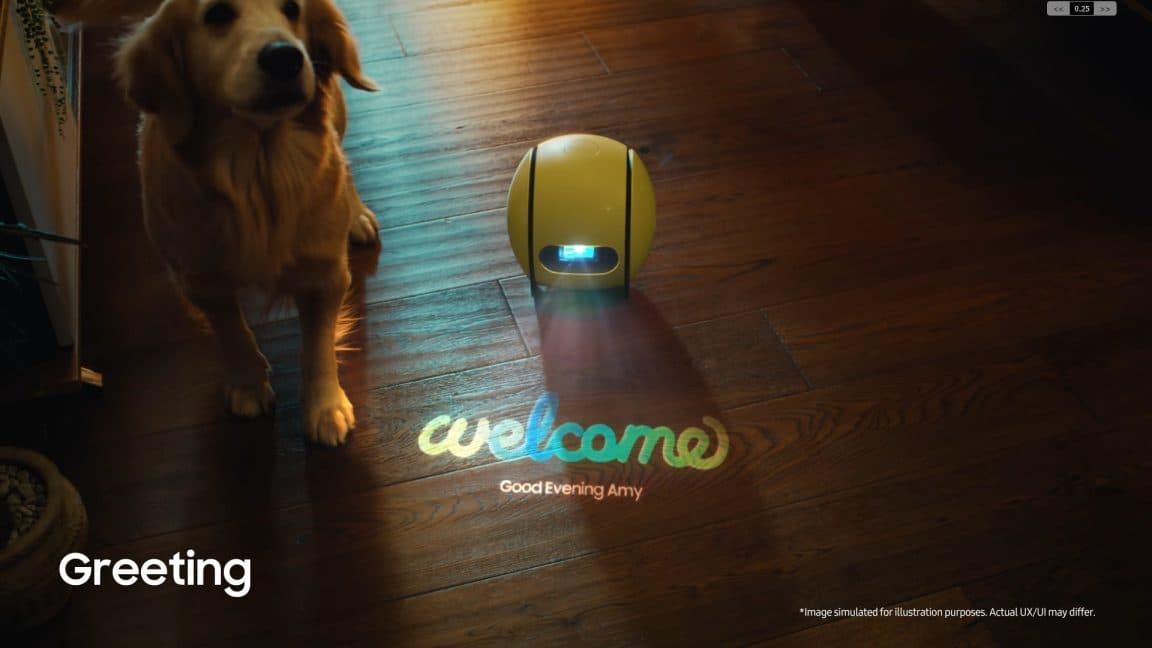
Samsung’s cute yellow ball has finally stopped rolling.
Six years after its big CES debut, Samsung’s Ballie home robot has been “indefinitely shelved,” according to Bloomberg, and demoted to an internal R&D plaything rather than a product you’ll ever be able to buy.
From star of CES 2020 to internal experiment
Back at CES 2020, Ballie was the surprise hit of Samsung’s keynote. Ars Technica called it “the furthest-along concept” the company showed.
The pitch was simple: a rolling, camera‑equipped companion that:
- Used facial recognition to follow its owner around the house
- Controlled smart home gear, like triggering a robot vacuum when you made a mess
- Acted as a mobile smart speaker
On stage and in glossy marketing videos, Ballie looked like the missing link between smart speakers and true home robots.
The glow‑up: CES 2024 and the projector trick
Samsung brought Ballie back at CES 2024 with a major redesign:
- A larger, more spherical body
- Three wheels hidden inside the shell
- A light ring wrapped around the chassis
This time, the headline feature was a built‑in projector. Samsung said Ballie could offer “two to three hours of continued projector use” on a charge and showed a video of the robot beaming content onto walls around the home.
Ballie also appeared connecting to a smartphone, reinforcing the idea that it would act as a roaming interface for your digital life.
CES 2025: demos, wine recommendations, and a launch promise
At CES 2025, Samsung shifted into launch mode. The company ran limited live demos of Ballie:
- Sending directions to a phone
- Making wine recommendations
On the show floor, Samsung said Ballie would go on sale sometime in 2025.
In April 2025, the company put that in writing, announcing plans to sell Ballie in the US and South Korea in the summer of 2025. The press release promised that, “Available to consumers this summer, Ballie will be able to engage in natural, conversational interactions to help users manage home environments.”
Samsung framed Ballie as a kind of mobile AI butler, powered by Google Gemini and able to:
- Adjust lighting
- Greet people at the door
- Personalize schedules
- Set reminders
- And more smart‑home‑adjacent tasks
On paper, it finally sounded like a real product, not just a concept.
2026: no launch, “indefinitely shelved”
Summer 2025 came and went. Ballie never shipped.
Now it’s early 2026, and Bloomberg reports that Samsung has put the device on ice, describing it as “indefinitely shelved.” That’s about as far as you can get from a firm launch window.
A Samsung spokesperson told Bloomberg that Ballie is now an “active innovation platform” for internal use. That’s a very different label than “upcoming consumer gadget.”
According to the statement cited by Bloomberg, years of real‑world testing mean Ballie is now mainly informing how Samsung designs “spatially aware, context‑driven experiences,” especially around:
- Smart home intelligence
- Ambient AI
- Privacy‑by‑design
Translated: the ideas, software, and sensors that powered Ballie are being mined for other products, even if the ball itself never escapes the lab.
The site is still online, but don’t hold your breath
Adding to the mixed signals, Samsung’s website where you can still register to “get the chance to be the first to meet Ballie” remains live. Technically, the company could change its mind and green‑light a launch later.
But right now, all signs point the other way. Samsung either isn’t confident that:
- Ballie can reliably deliver its promised features over months and years, and/or
- Enough people will pay what’s likely to be a high price for a home robot
Instead, the safer move is to strip out the best pieces—like spatial awareness, ambient AI behaviors, and privacy‑minded design—and ship them in less risky products such as TVs, appliances, or smart‑home hubs.
Another home robot cautionary tale
Ballie now joins a long list of ambitious home robots that looked great in polished CES videos but never quite translated into mass‑market reality.
Samsung hasn’t officially killed the brand, but calling it an internal “innovation platform” and shelving consumer plans indefinitely is about as close as it gets. Until something changes, Ballie is effectively vaporware—a bright yellow symbol of how hard meaningful home robotics still is, even for one of the biggest electronics companies on the planet.