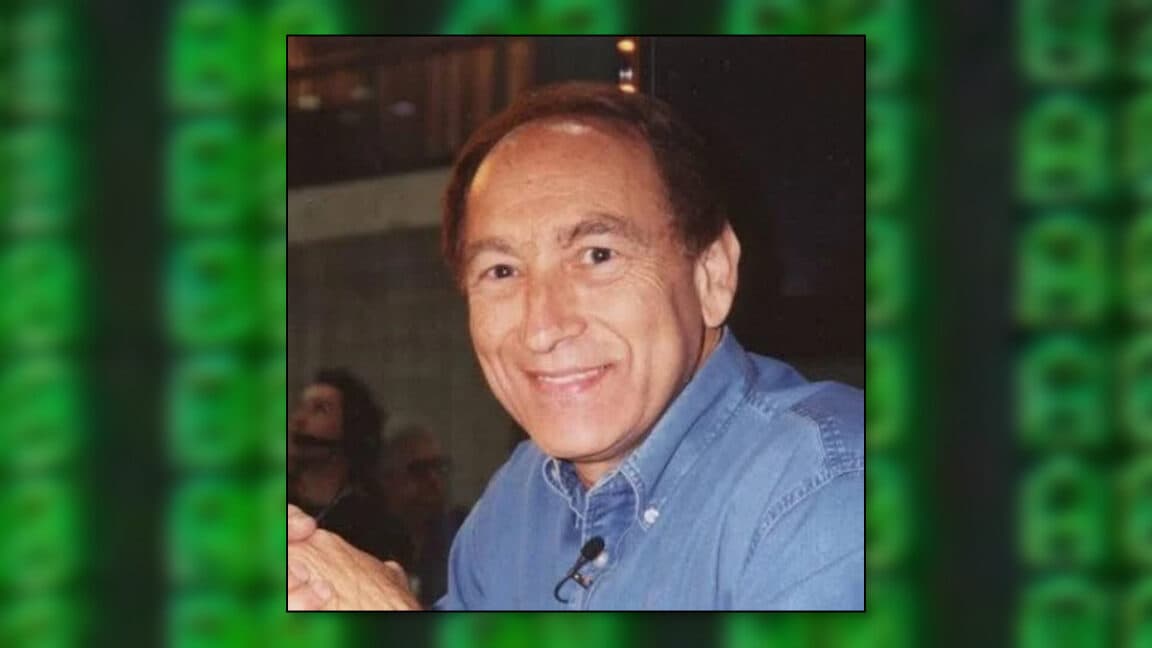
Stewart Cheifet spent almost two decades explaining a new, confusing machine to the American public: the personal computer.
Cheifet, the television producer and PBS host behind Computer Chronicles and Net Cafe, died on December 28, 2025, in Philadelphia at the age of 87.
From the early 1980s through the early 2000s, if you wanted to understand what a PC could actually do, you didn’t go to YouTube. You tuned into public television and watched Cheifet calmly walk through hardware, software, and the emerging online world.
The man who made PCs make sense
Cheifet created and hosted Computer Chronicles, which aired on PBS from 1983 to 2002 and "helped demystify a new tech medium for millions of American viewers." The show covered the entire arc of the personal computer boom: early IBM PCs, the first Apple Macintosh models, the rise of the World Wide Web, and the dot-com era.
The series actually started even earlier, in 1981, as a local weekly show at KCSM-TV, the College of San Mateo’s public television station, where Cheifet was station manager. Two years later, in 1983, it became a national PBS series.
Over 19 seasons, Computer Chronicles produced 433 episodes. The format barely wavered: product demos, guest interviews, and a closing news segment called “Random Access” that rounded up the latest industry developments.
Cheifet didn’t just narrate from afar; he brought the industry’s key players into the studio. Across the show’s run, he interviewed figures like Bill Gates, Steve Jobs, and Jeff Bezos while walking viewers through the software and hardware that would reshape work and home life.
From 1983 to 1990, he shared hosting duties with Gary Kildall, the Digital Research founder behind CP/M, the operating system that predated MS‑DOS on early personal computers. For many viewers, that pairing was their first real introduction to the people actually building the PC revolution.
From PCs to the early web
Cheifet didn’t stop with the desktop era. As the Internet took off, he launched a companion series: Net Cafe.
Running from 1996 to 2002, Net Cafe documented the early Internet boom and introduced mainstream viewers to then-new websites and services, including Yahoo, Google, and eBay. At a time when “going online” still felt experimental, Cheifet turned abstract buzz into something concrete you could see on a screen.
A legacy preserved online
After Computer Chronicles and Net Cafe ended and Cheifet left day-to-day television production, he pivoted to preserving the very history he had helped document.
He worked as a consultant for the Internet Archive, helping make episodes of both series publicly available. In a comment on Slashdot, Internet Archive founder Brewster Kahle recalled first meeting Cheifet during a Net Cafe interview and then asking about the show’s tapes:
“After it I asked what he was doing with his archive, we kept talking and he founded the ‘collections group’ at the Internet Archive and helped us get all of Computer Chronicles on this new site and so much more. Wonderful man, and oh that voice!”
Because of that collaboration, most episodes of Computer Chronicles remain free to watch via the Internet Archive, functioning as a detailed record of the personal computing era as it unfolded on screen.
A re-digitization effort is currently underway that draws on Cheifet’s personal tapes to recover episodes that were missed during the first archiving pass, extending the record even further.
From math and psychology to law and journalism
Cheifet was born in Philadelphia on September 24, 1938. In 1960, he earned degrees in mathematics and psychology from the University of Southern California. He later graduated from Harvard Law School.
His early media career took him to Europe. While working at CBS News in Paris in 1967, he met Peta Kennedy. The two married later that year.
Beyond his on-air and production work, Cheifet also taught broadcast journalism at the Donald W. Reynolds School of Journalism at the University of Nevada, Reno, passing on decades of experience to the next generation of reporters and producers.
In a 2014 interview with the school, he reflected on why he pursued both law and journalism, tying them together as tools for peaceful change:
“They are the two legal revolutionaries. They are the two professions that allow you to change the world without having to blow someone up.”
That combination—legal training, journalistic rigor, and a calm on-screen presence—helped Cheifet guide millions of viewers through one of the most important technological shifts of the last century without hype or panic.
His shows captured the PC and early Internet revolutions as they happened. Thanks to the archives he helped build, that history—and that voice—are still just a click away.