1. Headline & intro
Framework’s new Laptop 13 Pro is the company’s most important product since it launched the original modular notebook five years ago. It’s the first time the startup openly compromises on perfect backwards compatibility in order to chase battery life, performance and mainstream appeal. For anyone who cares about repairability, right‑to‑repair laws, or escaping soldered‑everything MacBooks and ultrabooks, this is a pivotal moment. In this piece, we’ll look beyond the spec sheet and ask a harder question: is this the inevitable maturing of a modular platform, or the start of a quiet retreat from its original ideals?
2. The news in brief
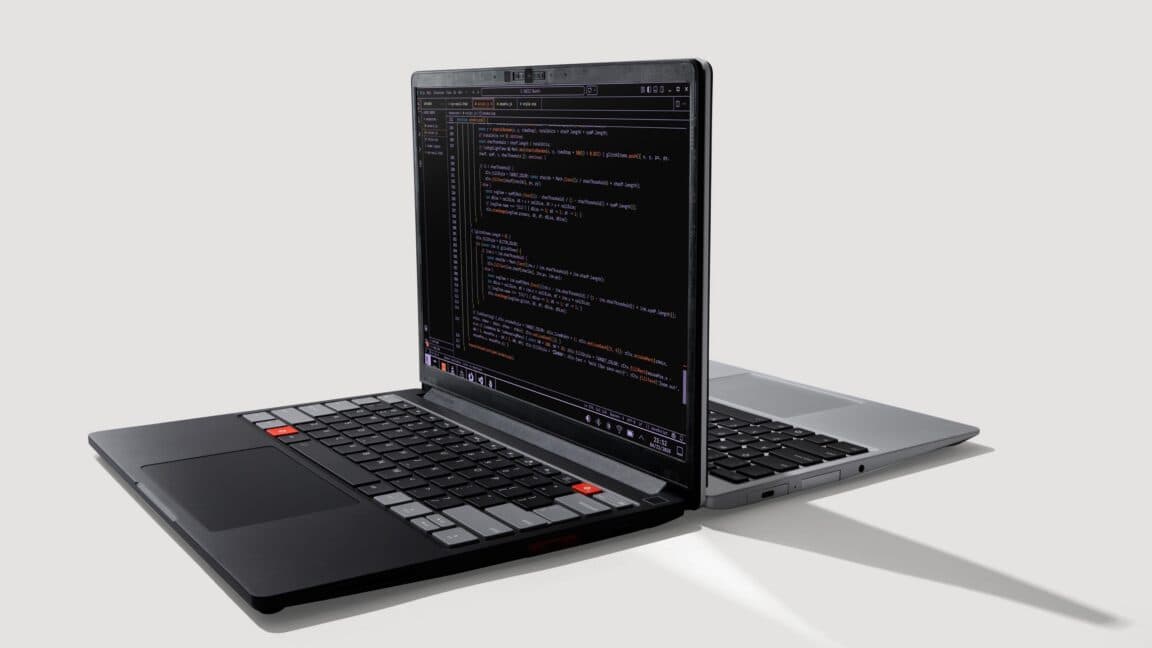
According to Ars Technica, Framework has announced the Framework Laptop 13 Pro, a substantial redesign of its 13.5‑inch modular notebook.
The new model adds Intel Core Ultra Series 3 ("Panther Lake") CPUs, a larger 74 Wh battery, Framework’s first touchscreen display, a new black aluminium chassis option, and a haptic trackpad. The 13.5" screen keeps the 3:2 aspect ratio and 2880×1920 resolution but now reaches up to 700 nits, 120 Hz with variable refresh, and supports touch input.
To feed Intel’s newer integrated Arc GPUs, Framework moves from traditional SO‑DIMMs to LPDDR5X via LPCAMM2 modules, which reduces power consumption but breaks RAM compatibility with earlier boards.
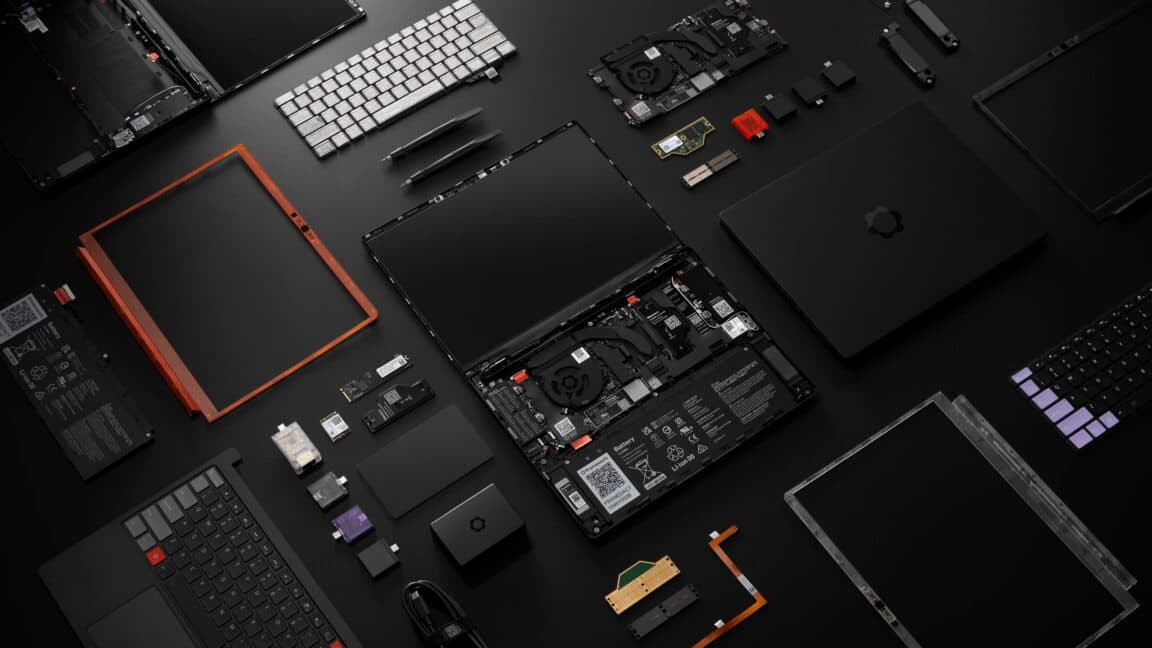
Chassis, keyboard and battery parts are not cross‑compatible with the old Laptop 13, but motherboards and displays remain interchangeable. DIY configurations start at $1,199 with a Core Ultra 5, while bare motherboards begin at $449. Pre‑orders are open now, with shipments planned for June. Framework will also offer the new chassis with its existing Ryzen AI 300‑series mainboard.
3. Why this matters
The 13 Pro is the clearest proof yet that “modular” does not mean “frozen in time.” Physics, battery chemistry and Intel’s platform demands eventually collide with the romantic idea that one chassis can last forever.
The big winner here is battery life. Framework’s 13‑inch line has always been competitive on repairability, not endurance. Moving to a 74 Wh pack and more efficient LPDDR5X memory is a serious attempt to fix that. If Framework’s claimed “20+ hours of 4K video streaming” even roughly translates into all‑day mixed use, the laptop suddenly competes with MacBooks and premium ultrabooks on their strongest metric.
The losers are users who bought heavily into the promise of near‑total cross‑compatibility. If you planned to keep your existing chassis and just swap boards for a decade, this is your first real speed bump. To benefit from the bigger battery and haptic trackpad, you need not just a new bottom shell but also new RAM in a still‑exotic format. That’s a non‑trivial extra cost, especially at current memory prices.
Yet there’s another way to see this: Framework is taking on the role that Intel and the big OEMs have quietly abandoned – pushing a new memory standard in a user‑upgradeable way. LPCAMM2 promises soldered‑like efficiency while remaining modular. Someone had to go first for enthusiasts; a nimble company with a loyal community is arguably the right candidate.
Competitively, this moves Framework closer to the “serious work laptop” category. Touchscreen, better speakers with Dolby Atmos, a three‑year warranty option in the US and more polished design touches are what IT buyers and pros look for. The 13 Pro doesn’t just speak to tinkerers anymore; it’s aiming at people who might otherwise buy a ThinkPad X1, Dell XPS or MacBook Pro, but feel uneasy about soldered parts and landfill‑friendly designs.
4. The bigger picture
The 13 Pro lands at the intersection of three broader trends.
First, the slow but steady rise of repairability as a differentiator. In phones, Fairphone has built a business on this. In laptops, most OEMs still talk sustainability while continuing to glue batteries and solder RAM. Framework has been the counter‑example: a credible, modern notebook that invites you inside with a screwdriver in the box. Moving to LPCAMM2 and a new chassis generation is a test of whether modularity can evolve without turning into just another disposable design.
Second, there’s a platform power shift. Intel now effectively dictates that if you want its better integrated GPUs and power characteristics, you must adopt LPDDR5X. That is normally delivered via soldered packages. LPCAMM2 is the compromise that gives Intel what it wants while preserving some user freedom. Lenovo and Dell have tip‑toed into this territory; Framework is trying to make it the default for its flagship.
Third, there’s the convergence on MacBook‑style experiences: larger batteries, haptic trackpads, high‑brightness high‑refresh displays. Apple has spent years training users to expect big batteries and glass‑smooth touchpads. If a repairable laptop can get close on feel and endurance without copying Apple’s sealed slab philosophy, that’s strategically important – it proves you don’t have to sacrifice user agency to get a premium experience.
Historically, modular platforms die from either neglect (no new parts) or rigidity (the spec freezes and falls behind). Framework is trying a middle path: accept that some generations will break some parts of compatibility, but keep the expensive core – the logic board and display – as swappable as possible. That mirrors what happened on the desktop, where memory standards and sockets change, but cases, power supplies and many peripherals live on.
If this generational model works, the 13 Pro becomes not just a product but a new baseline platform for the next 4–5 years of Framework laptops.
5. The European angle
For European users, the 13 Pro is more than a spec bump; it’s an early glimpse of what compliance‑friendly hardware might look like under EU rules.
Brussels is tightening the screws on manufacturers through initiatives around right to repair, ecodesign and sustainable products. Even where legislation is not yet fully enforced, large public buyers and climate‑conscious organisations are already using these principles in procurement. A laptop designed from day one for board swaps, battery replacement and long‑term parts sales fits that narrative far better than most mainstream ultrabooks.
Framework already sells directly into many EU markets. For customers in Germany, France, the Nordics or the Benelux region – where repairability and environmental impact routinely drive purchasing decisions – the 13 Pro is almost tailor‑made. Being able to upgrade to a new mainboard or screen instead of replacing an entire laptop can significantly extend PC lifecycles in universities, NGOs and smaller companies that lack deep IT budgets.
The catch is supply chain maturity. LPCAMM2 modules are still rare; outside of a few OEMs and Crucial, the aftermarket is thin. European buyers are particularly sensitive to both pricing and availability – waiting weeks for a RAM module or paying a heavy premium could undermine the repairability story. Framework’s own store may become one of the only convenient sources in the region; that’s both an opportunity and a responsibility.
Compared to local competitors such as TUXEDO or Schenker/XMG, which offer well‑serviced but fairly traditional laptops, Framework’s approach is still unique. In a market where many consumers already know the French repairability index labels on devices, that uniqueness is a strategic asset.
6. Looking ahead
The 13 Pro’s success or failure will hinge on the next 12–18 months.
Technically, the key questions are:
- Can Framework deliver stable BIOS updates for every past mainboard in time for launch, so old boards can fully exploit the 74 Wh battery and new display?
- Will LPCAMM2 prices normalise fast enough to make upgrades feel like an investment, not a luxury tax?
- Does real‑world battery life live up to the early claims, especially under Linux – a platform Framework explicitly supports with a prebuilt SKU?
Commercially, watch for whether Framework can close institutional deals in Europe and North America. A few medium‑sized companies standardising on the 13 Pro platform would dramatically improve the economics of long‑term parts support.
There’s also a product‑strategy question: is this the first step toward a coherent multi‑device ecosystem? The announcement of a separate Bluetooth keyboard/trackpad for the upcoming Framework Desktop hints at a broader plan. If motherboards genuinely remain interchangeable across laptops and desktops, Framework could become a sort of "Lego for PCs" – albeit within the constraints of each generation’s power and thermal design.
The risk is clear: if LPCAMM2 fizzles in the wider industry, Framework could end up maintaining an orphaned memory standard largely on its own. That would weaken the long‑term upgrade promise precisely where it matters most.
7. The bottom line
Framework’s Laptop 13 Pro is both a strong product and an honest admission that full, eternal compatibility was never realistic. The company is betting that users will accept buying new RAM and a new bottom shell in exchange for real gains in battery life, performance and polish – as long as motherboards and screens remain swappable for years. The open question for readers is simple: how much compatibility do you truly need to feel comfortable investing in a modular platform?