Framework Laptop 16 finally looks finished – and quietly bets on OCuLink
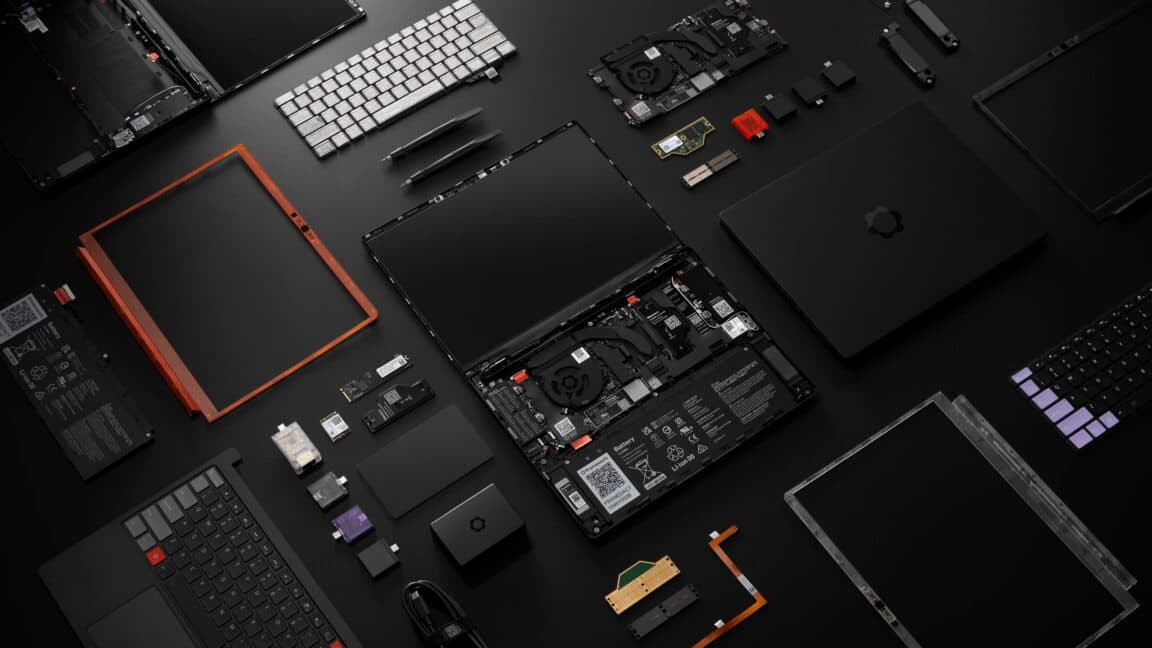
The most radical thing about Framework was never the screws – it was the willingness to ship something slightly awkward and trust that early adopters would tolerate it. With the latest refresh of the Framework Laptop 16, that bet is starting to pay off. A cleaner design, a cheaper Ryzen option and, most interestingly, a serious embrace of OCuLink for external PCIe all point in the same direction: Framework is trying to evolve from a fascinating prototype into a stable platform for an ecosystem of modular, semi-DIY hardware.
In this piece we’ll unpack what has actually changed, why OCuLink is the real headline, and what this means for laptops, eGPUs and repairability – particularly in Europe.
The news in brief
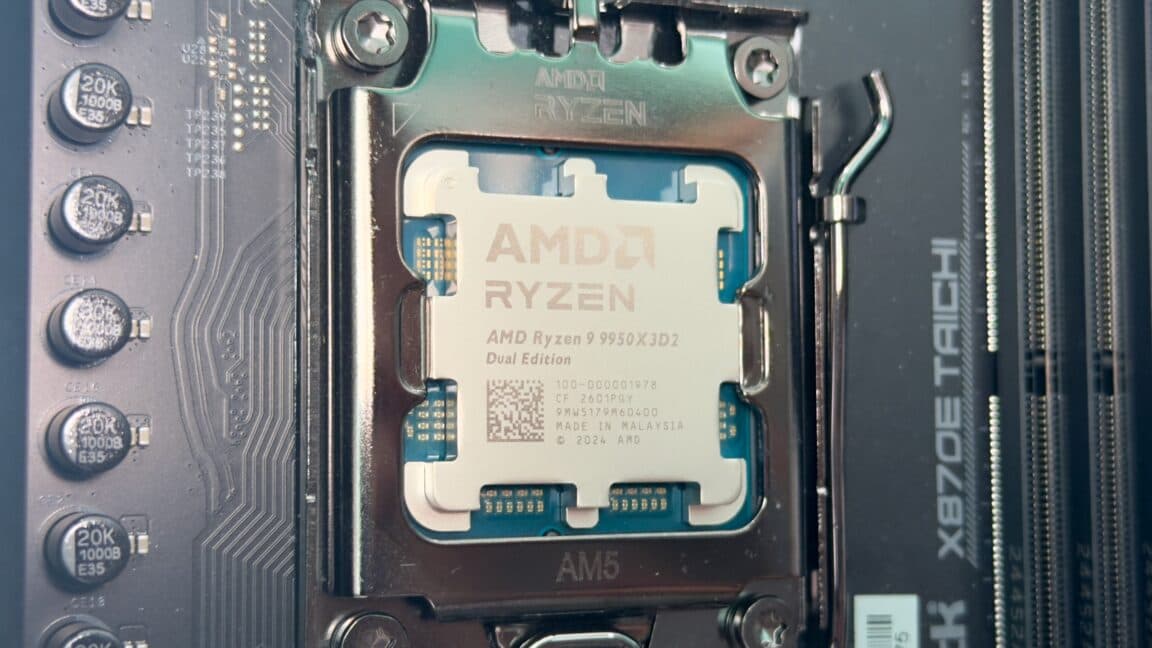
According to Ars Technica, Framework has announced several updates to the 16‑inch model. On the CPU side, there’s now a cheaper six‑core Ryzen AI 5 340 option below the existing eight‑core Ryzen AI 7 350. That temporarily lowers the Laptop 16’s starting price to $1,599 for a prebuilt configuration and $1,249 for the DIY Edition, down from $1,799 and $1,499 respectively.
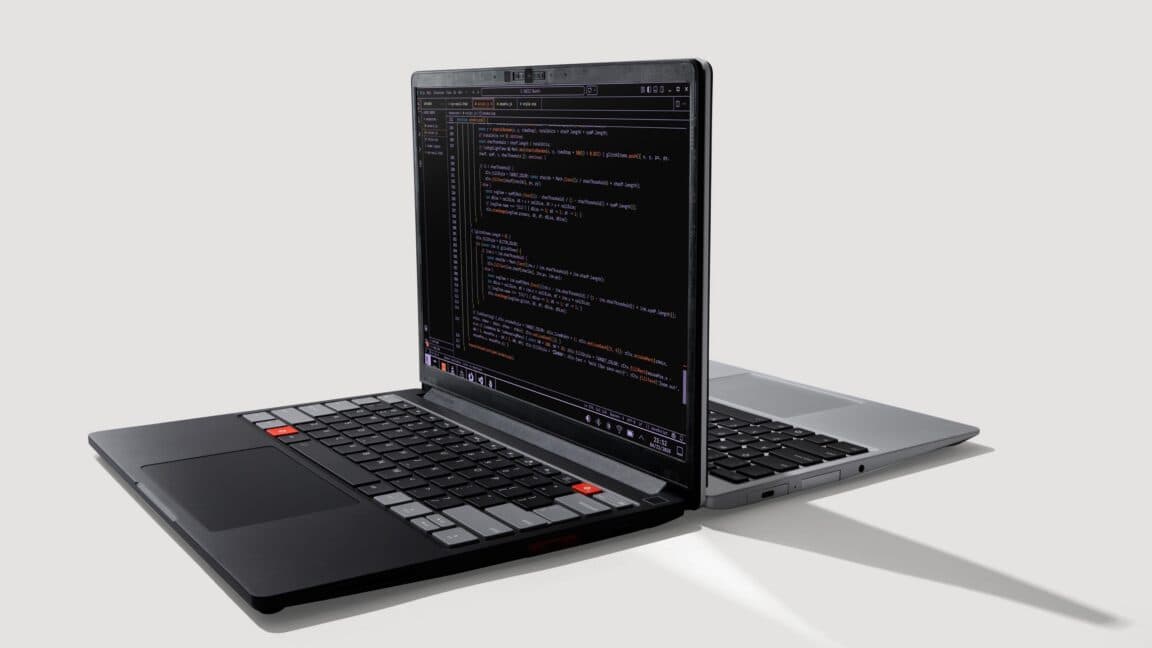
A set of cosmetic and usability tweaks address one of the main complaints about the 16: its “Lego-like” top deck. Instead of needing multiple keyboard and spacer modules to form a complete surface, Framework now offers a one‑piece keyboard (without numpad) and a one‑piece centered trackpad. The new touchpad also uses the haptic mechanism introduced in the Framework Laptop 13 Pro. Both modules are up for preorder and are expected to ship in June.
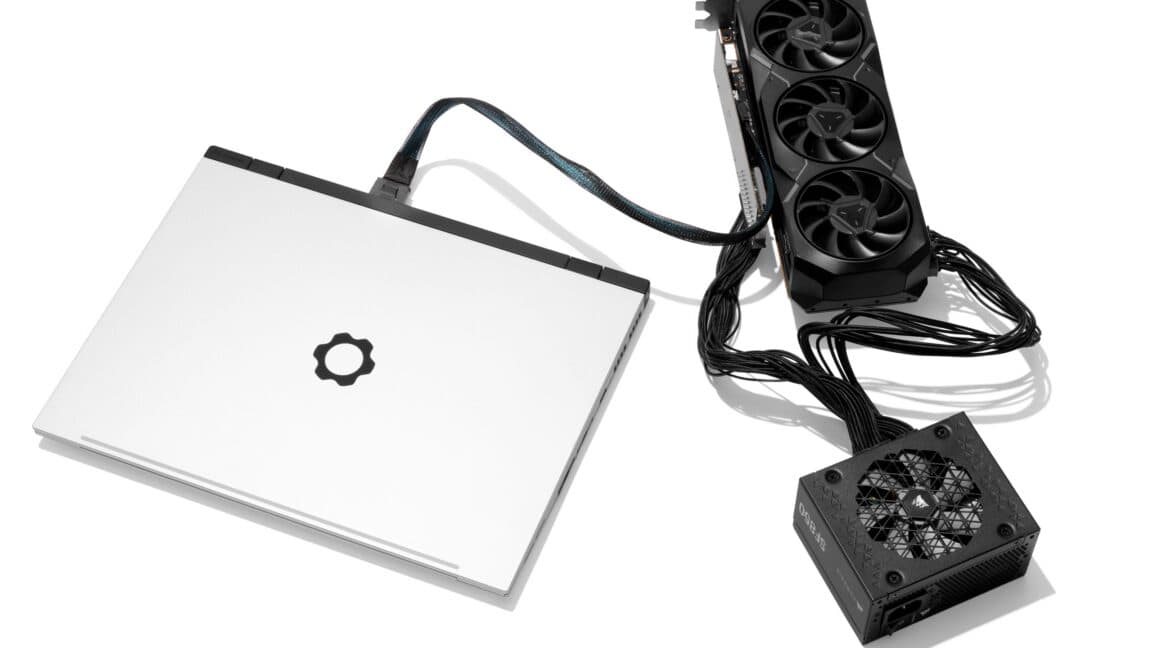
The most substantial new feature is an OCuLink Dev Kit that exposes up to eight lanes of PCIe 4.0 to external devices. Owners will be able to replace the laptop’s GPU/Expansion Bay shell with an adapter board, then connect either Framework’s dock for its own GPU module or a dock for standard desktop PCIe cards, including external GPUs. Pricing for the OCuLink hardware has not yet been disclosed and launch is planned for later this year.
Why this matters
The aesthetic fixes might sound trivial compared to PCIe lanes and AI NPUs, but they solve a real adoption problem. The original multi‑piece keyboard and trackpad were brilliant from a modularity standpoint and visually off‑putting for anyone outside the hardcore tinkerer crowd. For a €2,000‑class machine, “unfinished prototype” is a hard sell in a world of ultra‑polished MacBooks and XPS machines.
By offering one‑piece input modules as defaults, Framework is doing something important: separating mass‑market experience from enthusiast flexibility. If you care about a number pad or weird layouts, the modular system still exists. If you don’t, you finally get a laptop that looks and feels normal. That widens the addressable market without abandoning the original vision.
The cheaper Ryzen AI 5 340 option plays a similar role. Framework laptops have always been more about philosophy than raw value. Dropping the entry price – even if RAM/SSD prices eventually eat some of the saving – makes it easier for students, developers and small businesses to justify paying the “modularity premium” over a conventional gaming notebook.
But the real strategic move is OCuLink. Until now, Framework’s external GPU story was the same as everyone else’s: Thunderbolt/USB4 docks, with all the usual bottlenecks and protocol complexity. Exposing eight lanes of PCIe 4.0 directly is a different proposition. It turns the Laptop 16 into something closer to a modular mobile baseboard – a portable front‑end for desktop‑class GPUs, capture cards or specialized accelerators. That won’t matter to most consumers, but it matters a lot to the small, vocal community that already stretches laptops far beyond intended use‑cases.
The bigger picture
Framework’s OCuLink push sits at the intersection of three trends: the stagnation of Thunderbolt eGPU docks, the slow rise of repairability regulation, and a niche but persistent appetite for modular computing.
Thunderbolt eGPUs never went mainstream. Between bandwidth overheads, expensive enclosures and finicky driver support, they settled into a comfortable niche for developers and a few creative professionals. OCuLink attacks the first of those issues: as a cabled PCIe interface, it avoids the tunnelling and encoding overhead of Thunderbolt. Eight lanes of PCIe 4.0 are theoretically far closer to a desktop slot than a 40 Gbps USB4 port will ever be in practice.
We’ve seen OCuLink appear in mini‑PCs and barebones systems from Chinese boutique brands, but not in anything with mainstream Western distribution. Framework is effectively trying to legitimise the standard in the laptop world. If it works, expect a wave of community‑designed 3D‑printable enclosures, small‑batch docks and weird hybrid builds that blur the line between laptop and SFF desktop.
Historically, most modular computing projects have failed precisely because they tried to be too modular, too quickly (think Google’s Project Ara or Alienware’s upgradable laptop GPUs). Framework is taking the opposite route: lock in a few stable form factors (bays, expansion cards, keyboards), iterate on the aesthetics and usability, and then quietly increase what you can hang off the system from the outside. The OCuLink Dev Kit is less about the first‑party accessories Framework will sell and more about permission for the community – and eventually small OEMs – to treat the Laptop 16 as a component.
In parallel, the Ryzen AI branding underscores another shift: laptops in 2026 are being sold not only on CPU/GPU performance but on on‑device AI capability. Here, Framework is mostly following AMD’s roadmap rather than leading, but there’s a useful synergy: a laptop that can be kept for 6–8 years needs strong local compute for whatever AI workloads emerge. Replaceable mainboards and external PCIe connectivity are a hedge against rapid obsolescence.
The European / regional angle
For European users, these updates land in the middle of a regulatory storm that happens to favour Framework’s philosophy. The EU’s Ecodesign rules and the broader right‑to‑repair agenda are steadily pushing manufacturers toward longer‑lived, more repairable devices; France already has a repairability index, and Germany and Austria subsidise repairs in some regions. A laptop designed around replaceable modules and community‑serviceable parts is almost tailor‑made for this environment.
Where things get interesting is OCuLink. Running a high‑power desktop GPU from a laptop via a DIY dock raises familiar questions around CE compliance, warranty, and cross‑border returns. Framework’s decision to ship the OCuLink kit as a “dev kit” with reference 3D‑printable designs is smart: it explicitly targets developers and enthusiasts who understand that building a PCIe enclosure with an external PSU is not the same as buying a polished eGPU box from Razer.
For European startups, studios and research labs, a Framework 16 plus OCuLink is potentially attractive: one mobile workstation can double as a front‑end for lab GPUs, FPGA cards or custom accelerators while still being a normal laptop on the road. That’s especially relevant in countries where office space is expensive and teams mix remote and on‑site work.
Competition-wise, there is still no European OEM offering anything comparable. Schenker/XMG in Germany and various Clevo‑based brands serve the enthusiast niche, but mostly via conventional gaming chassis. Framework’s presence in EU online channels and its openness to community manufacturing could catalyse a small but influential ecosystem of EU‑based accessory makers – from 3D‑printed OCuLink cases to local keyboard layouts that big vendors routinely neglect.
Looking ahead
Three questions will determine whether this refresh marks a turning point or just another niche revision.
First, will the cleaner design actually move the sales needle? If reviews and word of mouth shift from “amazing idea, but looks janky” to “this could replace my MacBook/Legion,” Framework gains access to buyers who previously admired from afar. Expect the one‑piece keyboard and haptic trackpad to quietly become the default choice in most configurations.
Second, how far will OCuLink spread? If the dev kit is priced sensibly and the documentation is good, we’ll likely see an explosion of community projects within 6–12 months of launch. From there, the question is whether any of it crosses the chasm into semi‑commercial products – prebuilt eGPU docks, capture rigs, maybe even rack‑style mounts for multiple Framework laptops as front‑ends.
Third, can Framework keep pace with the brutally fast AI PC cycle without breaking compatibility? The company’s promise hinges on being able to drop in new mainboards with fresh CPU/GPU/AI silicon into existing shells. If OEMs start soldering more to the board in the name of power efficiency and thinness, that becomes harder. The Laptop 16, as a thicker, workstation‑class device, may become the true flagship for long‑term upgradability while the 13‑inch line trends more mainstream.
On the risk side, OCuLink also exposes Framework to support headaches: miswired PSUs, flaky PCIe risers, cable quality issues. The more people treat the Laptop 16 as a generic PCIe endpoint, the more Framework will have to draw boundaries around what it officially supports.
The bottom line
These Framework Laptop 16 updates are incremental on paper but strategic in practice. A more polished keyboard and trackpad make the machine something you can recommend to a non‑enthusiast; a cheaper Ryzen option lowers the psychological barrier to entry; and OCuLink turns an already unusual laptop into a genuinely modular compute hub. For Europe in particular, it’s a glimpse of what a right‑to‑repair‑aligned, enthusiast‑friendly PC ecosystem could look like. The question is simple: do enough people want a laptop that behaves like a component, not a sealed appliance?